Oil Price Surge and Inflation Shock Shake Investor Confidence
The Pakistan Stock Exchange (PSX) faced a sharp downturn on Monday, with the benchmark KSE-100 Index losing 721 points amid rising global oil prices and a surprising spike in domestic inflation. Investor sentiment turned negative as renewed US-Iran tensions in the Middle East raised fears of crude supply disruptions, while Pakistan’s August inflation rate climbed faster than expected, adding pressure on an already fragile economic outlook.
What Triggered the Market Sell-Off?
Two major factors drove the steep decline in Pakistan’s equity market:
- Surging Oil Prices: Brent crude futures touched their highest level in over a month, climbing close to $97 per barrel as markets reacted to overnight strikes between the United States and Iran. This reignited concerns about potential disruptions in the Strait of Hormuz, a critical route for global oil shipments.profit.
- Inflation Shock: Pakistan’s Consumer Price Index (CPI) for August rose 11.15%, surpassing analyst forecasts and signaling persistent cost pressures on households and businesses. Higher fuel and wheat prices were among the key contributors to this inflation jump.
Together, these developments created a “perfect storm” for PSX, prompting investors to adopt a cautious stance and sell off shares in key sectors.
Sector-Wise Performance: Banks and Cement Lead Losses
The KSE-100’s drop was not uniform across all sectors. Commercial banks and cement stocks bore the brunt of the selling pressure, outweighing gains seen in technology, fertilizer, and select exploration and production (E&P) companies. This sectoral divergence highlights how macroeconomic uncertainty tends to hit interest-sensitive and construction-linked industries hardest.
Market analysts noted that heavy selling in banking stocks reflected worries over future interest rate moves, as the State Bank of Pakistan may keep rates elevated to combat inflation. Meanwhile, cement manufacturers faced headwinds from slowing construction activity and rising input costs.
Expert Views: Cautious Trading Ahead
Topline Securities reported that the KSE-100 remained under pressure throughout the session, with investor confidence shaken by geopolitical risks and domestic economic data. KTrade Securities equity trader Ahmed Sheraz pointed out that the index closed down by 509 points (0.29%) at 176,466.99, after hitting an intra-day high of 177,800.28 and a low of 176,375.01.
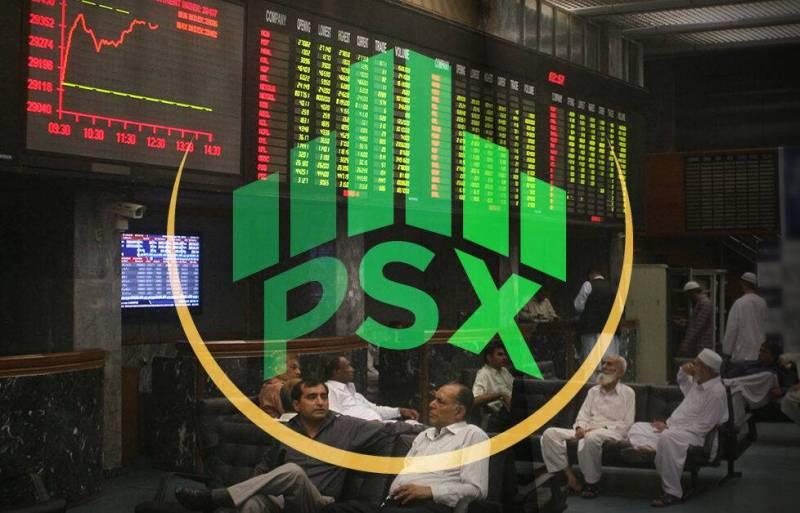
JS Global analyst Mubashir Anis Naviwala described the session as “cautious,” noting that global yields and oil prices were on the rise again due to negative news flow from the Middle East. He added that this caused a broad sell-off in risk assets, including Pakistani equities.
Looking ahead, experts expect trading to remain selective and volatility to persist. The market may continue to react sharply to any new developments in the US-Iran conflict, global crude prices, and upcoming monetary policy decisions in Pakistan.
Global Context: Asian and US Markets Also Under Pressure
Pakistan’s market decline was part of a broader regional and global trend. Asian equity markets fell sharply on Wednesday as surging oil prices heightened inflation and interest rate concerns. On Wall Street, stocks also drifted lower, with oil prices behind much of the pressure on inflation, bond yields, and the broader market.
The yield on the US 10-year Treasury rose to 4.79%, its highest level since January 2025, reflecting investor anxiety over persistent inflation and potential rate hikes. This global risk-off mood further dampened sentiment in emerging markets like Pakistan.
What This Means for Pakistani Investors
For local investors, the current environment calls for a defensive strategy:
- Diversify Portfolios: Avoid overexposure to single sectors, especially those sensitive to interest rates and oil prices.
- Monitor Inflation Data: Keep a close watch on monthly CPI reports and State Bank policy statements.
- Stay Updated on Geopolitics: Any escalation or de-escalation in the Middle East can move oil prices—and thus PSX—significantly.
Long-term investors may find value in quality stocks that have fallen due to market-wide panic, but timing and sector selection will be critical.
Final Thoughts
The 721-point drop in the KSE-100 is a clear reminder of how external shocks—like oil price spikes and geopolitical tensions—can quickly translate into local market volatility. With inflation remaining stubbornly high and global uncertainty showing no signs of easing, Pakistani equities are likely to experience continued ups and downs in the near term.
Investors should stay informed, avoid knee-jerk reactions, and focus on fundamentals when navigating this turbulent phase.