1. Oil prices hold firm after Trump–Xi meeting
Oil prices stayed firm after a high‑profile meeting between US President Donald Trump and Chinese leader Xi Jinping, where the war in Iran and oil trade were key topics. West Texas Intermediate crude settled just above 101 dollars a barrel, while Brent closed near 106 dollars, showing that the market remains tight despite recent swings.
For traders and energy watchers, this latest move confirms that political headlines are driving as much of the price action as traditional supply and demand.
2. WTI above $101 and Brent near $106
Both major benchmarks are holding at levels that would have seemed high only a few years ago. WTI crude, the main US benchmark, was little changed but still settled above 101 dollars, while Brent, the global reference price, finished close to 106 dollars a barrel.
These levels reflect the ongoing risk premium linked to the Iran war, worries about supply disruption and uncertainty around future demand. As long as prices stay above 100 dollars, fuel costs, inflation pressures and growth risks remain front of mind for governments and businesses.
3. Trump–Xi talks: oil trade and Iran on the table
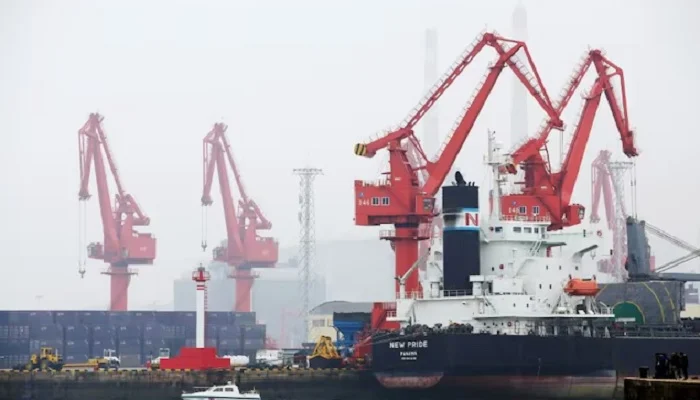
According to the US side, Trump and Xi discussed plans to increase oil trade between their countries, signalling that energy is now at the centre of their relationship. The two leaders also agreed that Iran must never obtain a nuclear weapon, underlining how closely security concerns and oil flows are linked.
For the global oil market, closer US–China energy ties could reshape trade routes over time. More US crude heading to Asia would change tanker patterns and may weaken the influence of some traditional suppliers.

4. Iran war keeps risk premium elevated
The backdrop to all this is the ongoing war with Iran, which has already shaken shipping in the wider Middle East and raised fears over the Strait of Hormuz. Even when no major new incident hits the headlines, the mere possibility of disruption is enough to keep a layer of risk priced into Brent and WTI.
Refiners, airlines and transport firms are watching the conflict closely because any escalation near key routes could drive another spike in crude and fuel prices. For now, the market seems to be in a holding pattern, waiting for clearer signals from both the battlefield and diplomacy.
5. What the price action tells traders
The fact that oil “only” steadied after the Trump–Xi meeting, instead of jumping or crashing, tells its own story. Traders appear to believe that the talks reduced the odds of a sudden break in relations, but they also see no quick solution to the Iran war or to broader supply worries.
This kind of muted reaction is typical when the market has already priced in a lot of risk. Prices are high, volatility is elevated, and yet there is no clear trend, which makes short‑term trading more difficult and encourages many players to stay cautious.
6. The wider outlook for the oil market
Looking ahead, the balance of the oil market will depend on three main forces: the course of the Iran conflict, the depth of US–China energy cooperation and the response from other producers. If tensions in the region ease and trade flows stabilise, some of the current risk premium could fade, bringing Brent and WTI back from the 100‑dollar zone.
On the other hand, any shock near key shipping lanes or a breakdown in talks could send prices sharply higher again. For now, the safest reading is that the world is still in a fragile phase, where geopolitics and crude markets are tightly bound together, and where every headline from Washington, Beijing or Tehran can move the screen in seconds.