7 Powerful Ways U.S.-China Cooperation Could Reshape the Global Order
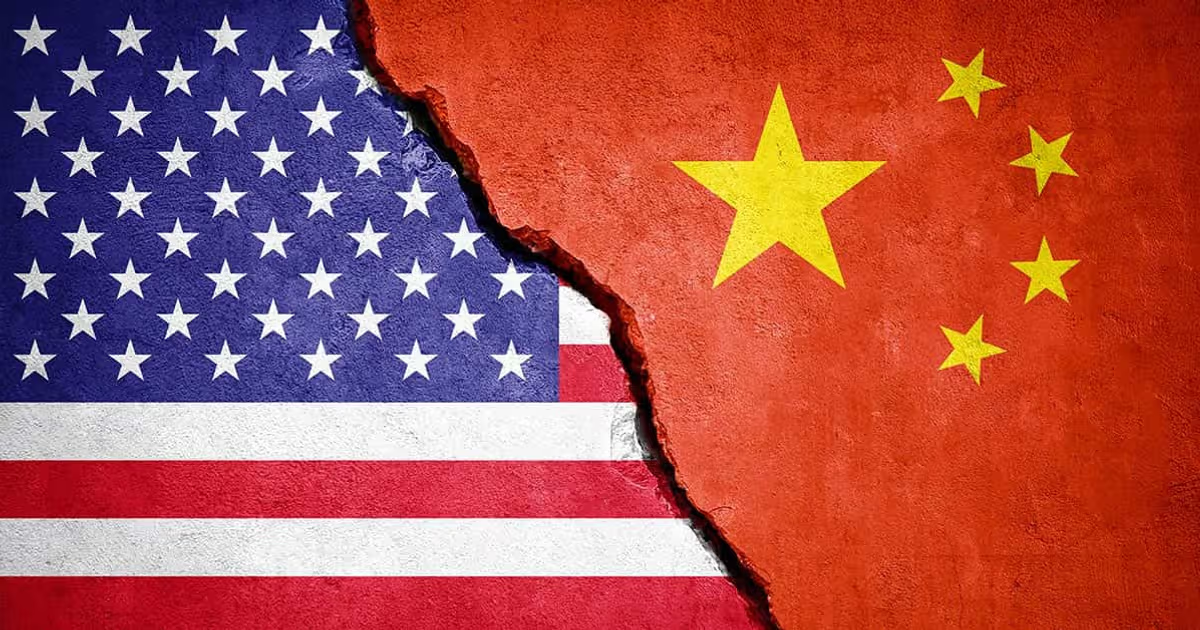
Recent meetings between the United States and China have reopened a major debate in global politics: can cooperation between the world’s two largest powers create stability, or will it simply strengthen a new era of great-power bargaining? The discussion is not only about trade or diplomacy anymore. It also involves technology, security, rare earth minerals, Taiwan, Iran, and the future of international institutions.
For many observers, this moment feels different from earlier phases of U.S.-China engagement. In the past, closer ties were often linked to globalization, open markets, and broader international coordination. Today, however, the conversation is shaped by rivalry, strategic leverage, and national interest. That is why the current round of U.S.-China cooperation matters so much.
What Is Driving the New Cooperation?
The latest discussions reportedly covered tariffs, artificial intelligence technology, rare earth minerals, Taiwan, Iran, and global trade. These are not minor issues. Each one affects economic stability, military planning, and long-term geopolitical influence.
The United States wants reliable access to critical materials and stronger trade stability. China, meanwhile, seeks access to advanced technology, especially high-performance semiconductors that support artificial intelligence development. This makes cooperation both necessary and complicated.
1. Global Trade Could Become More Stable
One of the clearest effects of improved U.S.-China ties would be greater stability in world trade. Because both countries sit at the center of the global economy, even small changes in their relationship can affect supply chains, shipping, prices, and investment flows.

If tariffs ease and trade talks continue, businesses may face less uncertainty. That could help factories, exporters, and financial markets around the world. Still, the benefit depends on whether agreements are broad and lasting or only short-term political deals.
2. Technology Competition May Intensify
Technology is now one of the most sensitive areas in U.S.-China relations. China wants better access to advanced semiconductors, while the United States wants to protect its technological edge and national security interests. This means any cooperation in tech is likely to be selective rather than broad.
Artificial intelligence, chip manufacturing, and digital infrastructure will remain central topics. Even when both sides cooperate, they are still competing for leadership in the technologies that will shape the next decade. That makes this relationship more strategic than symbolic.
3. Rare Earth Minerals Could Become a Bargaining Tool
Rare earth minerals are essential for military equipment, electronics, electric vehicles, and renewable energy systems. The United States needs dependable access to these materials, and China remains a major player in this space. This gives both sides leverage in negotiations.
If critical minerals become part of larger diplomatic deals, the global supply chain could become more political. That would affect not just Washington and Beijing, but also manufacturers and governments across Asia, Europe, and the Middle East.
4. Smaller Nations May Lose Influence
A major concern around stronger U.S.-China coordination is that smaller countries could be sidelined. If global decisions are shaped mainly by private bargaining between two superpowers, multilateral institutions may lose influence. This could weaken the role of the United Nations, the G20, and other international platforms.
Countries such as Australia, Canada, and several European states may worry that their interests will matter less in a world dominated by big-power deals. In that sense, cooperation between Washington and Beijing may bring stability at the top, but uncertainty for everyone else.
5. Taiwan Remains a Flashpoint
Taiwan remains one of the most sensitive issues in U.S.-China relations. China views Taiwan as part of its territory, while the United States continues to support Taiwan’s defensive capabilities. Any sign that the issue is being used as a bargaining chip would raise alarm across the region.
The concern is not only military conflict. It is also the possibility that Taiwan’s future could be shaped by negotiations between the two powers rather than by the island’s own strategic reality. That is why Taiwan continues to be a test of how far cooperation can go without crossing red lines.
6. Iran Could Enter the Negotiation Space
Iran has also become part of wider strategic discussions. If Washington seeks support from Beijing on regional pressure or nuclear concerns, China could gain a more active role in shaping Middle East diplomacy. That would mark a major shift in global power management.
Such an arrangement may improve short-term coordination, but it could also concentrate too much influence in the hands of a few states. For regional actors, that means less room to shape outcomes that directly affect their security.
7. The Global Order Could Become More Hierarchical
The biggest question is not whether the United States and China can cooperate. They already must cooperate on issues like trade, climate, energy, and nuclear security. The real question is what kind of global order their cooperation will produce.
If cooperation is driven by mutual problem-solving, the world may become more stable. But if it turns into transactional bargaining and spheres of influence, the international system may become more hierarchical and less open. That would be a major shift away from the rules-based model many countries still depend on.
Conclusion
U.S.-China cooperation has the power to reduce instability, support trade, and ease global economic pressure. At the same time, it may also deepen great-power dominance and reduce the influence of smaller nations.
That is why the current moment matters so much. The world is not just watching whether Washington and Beijing can work together. It is watching what kind of world they create if they do.