Introduction
South Korea’s exports are off to a strong start in 2026, even as new US tariff risks hang over global trade. Early data for February shows that resilient semiconductor demand and the artificial intelligence (AI) boom are helping the country maintain export momentum.
Early Export Data: Strong Start to February
According to customs figures, South Korea’s exports in the first 20 days of February rose sharply from a year earlier. On an unadjusted basis, outbound shipments for February 1–20 climbed around 23.5 percent year-on-year, reaching roughly 43.5 billion dollars. Imports also increased by about 11.7 percent, producing a trade surplus of close to 4.9–5.0 billion dollars in this period.
This performance builds on an already impressive January, when exports jumped by about one-third compared with a year earlier. Strong external demand has turned trade back into a solid support for South Korea’s growth outlook after a weaker patch in previous years.
Chips and AI: The Core Growth Engine
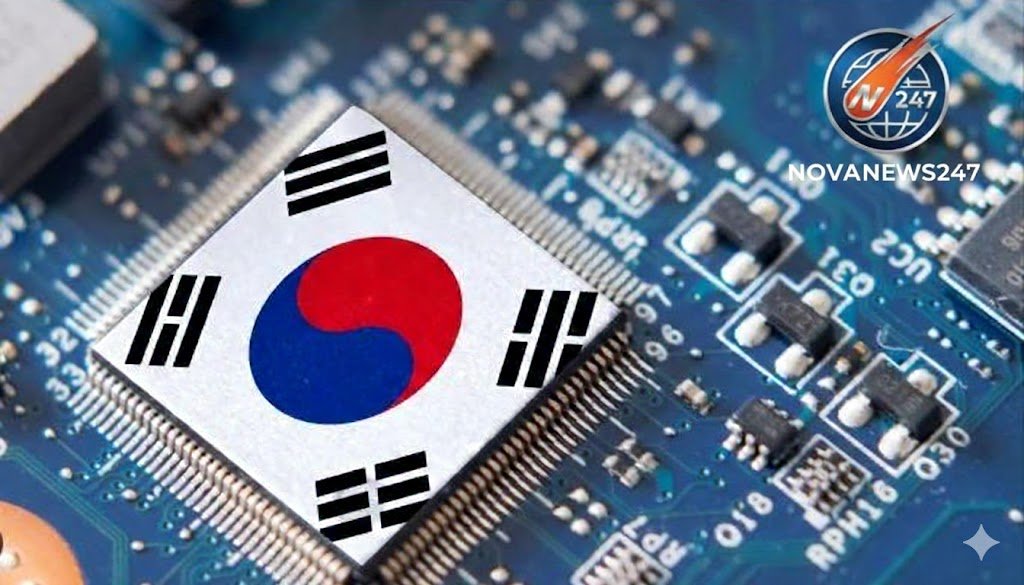
Semiconductors remain the backbone of South Korea’s export story. In 2025, total exports hit a record of about 709.4 billion dollars, with semiconductor shipments alone reaching roughly 173.4 billion dollars after a more than 20 percent jump driven by AI-related demand. The latest early-February numbers suggest that this trend is continuing, as global investment in AI infrastructure keeps pushing up orders for memory chips and advanced processors.

South Korea and Taiwan now dominate a large share of the world’s chip supply, which gives Korean exporters some cushion against policy shocks in any single market. Even though the US is an important buyer, a relatively small share of South Korean chip exports is directly tied to American demand, with Asia—especially China, Taiwan and Vietnam—taking the lead.
US Tariff Risks: Threat, But Not a Knockout
Despite the strong numbers, uncertainty around US tariff policy is a serious risk for South Korean exporters. Washington has approved a 25 percent tariff on certain advanced AI chips that are imported into the US and then re-exported to third countries, a move widely seen as part of its strategy to control technology flows to China. South Korea’s government has stressed that the existing US–Korea trade deal remains intact, even after recent court decisions on emergency tariff powers, but it also acknowledges that pressure on high-tech trade is rising.
Seoul has warned that aggressive US chip tariffs would likely raise prices for American consumers rather than seriously damage Asian producers. With a diversified customer base and deep integration into regional supply chains, South Korean chipmakers still have multiple markets to sell into, even if US-bound shipments face more hurdles.

Trade Balance and Economic Outlook
The combination of strong exports and controlled import growth has pushed South Korea back into a comfortable trade surplus. A surplus of nearly 5 billion dollars in the first 20 days of February, on top of robust January figures, gives policymakers some breathing space on growth and currency management. The central bank is widely expected to keep interest rates steady at its upcoming meeting, as it balances solid export-driven growth against lingering global uncertainty.
Exports account for more than 40 percent of South Korea’s economy, so sustained momentum in shipments of chips, autos and other key products is critical for employment and investment. If the AI boom continues and protectionist measures remain contained, South Korea is well-placed to extend its export upswing through 2026.
Key Takeaways for Global Markets
- South Korea’s early-February export surge underlines the strength of global demand for semiconductors and AI-related hardware.
- New US tariffs on advanced chips create headline risk but are unlikely to fully derail Korean exporters, thanks to diversified markets and strong regional demand.
- A sustained trade surplus and robust tech exports support a more positive growth outlook for South Korea in 2026, even in a challenging policy environment.