Anthropic Halts Claude Fable 5 And Mythos 5 After US Security Warning
Anthropic has temporarily switched off access to its latest advanced AI tools, Claude Fable 5 and Claude Mythos 5, after US authorities raised concerns about possible security risks. The decision comes only days after the tools were made available more widely, showing how quickly powerful AI models can attract government scrutiny.
The move has triggered a heated debate in the tech and policy world about how safe cutting-edge AI really is, and how governments should respond when they believe a tool may be “too powerful” for public use.
Why The US Asked Anthropic To Suspend Access
According to Anthropic, US national security officials did not publish a detailed list of issues, but they did flag worries that the tools could be bypassed or “jailbroken” to uncover software vulnerabilities. Jailbreaking generally refers to forcing a system to ignore built‑in safeguards, so that it can reveal sensitive information or perform blocked actions.
Anthropic says it was instructed to block foreign nationals from using Claude Fable 5. To comply with that order, the company decided to disable both Fable 5 and Mythos 5 for all customers, at least for now. In practice, this means businesses, developers and researchers who had just started experimenting with these AI systems suddenly lost access.
What Makes Claude Fable 5 And Mythos 5 So Controversial?
Claude Fable 5 is described as a highly capable version of Anthropic’s Claude Mythos line, positioned as a direct competitor to OpenAI’s ChatGPT and Google’s Gemini. Before launch, Anthropic promoted the model as extremely powerful and highlighted the safeguards it had built to reduce cyber risk.
The company even warned earlier that the tool might be “too powerful to release”, arguing that it could potentially be used to identify or exploit weaknesses in computer systems if misused. That statement, combined with enthusiastic marketing, led some critics to accuse the firm of exaggerating its own model’s power to generate hype.
At the same time, Anthropic says its internal tests show that other widely available AI models can often discover similar low‑level vulnerabilities without any jailbreak at all. This raises an important question for regulators: if public models already have comparable capabilities, what makes Fable 5 uniquely risky?
The Role Of Jailbreaking And Cybersecurity Fears
Security agencies are especially worried about scenarios where advanced AI helps attackers move faster than defenders. If a model can be tricked into listing software flaws or suggesting attack paths, it could support malicious hacking or amplify existing threats.

Anthropic reports that US officials shared a specific jailbreak method, which the company then evaluated. Using that technique, the model could identify a small number of already known, relatively minor vulnerabilities. Anthropic argues that these weaknesses were not new and that they were easy to find using other tools as well, but the incident was still enough to trigger an official response.
For governments, even a small proof‑of‑concept can be taken seriously when the tool in question is powerful, scalable and accessible online. This is one reason national security bodies often act cautiously when dealing with cutting‑edge AI.
Growing Tension Between Anthropic And The Trump Administration
This suspension does not exist in isolation. Anthropic is already in a public dispute with the Trump administration over the use of its AI products inside US government agencies. The company has faced criticism from Donald Trump himself, and US Defence Secretary Pete Hegseth has labelled Anthropic a “supply chain risk”.
That label is significant because it is usually reserved for firms based in rival or adversarial countries, not for US companies. The designation signals that the government sees the company’s services as not secure enough for sensitive government work.
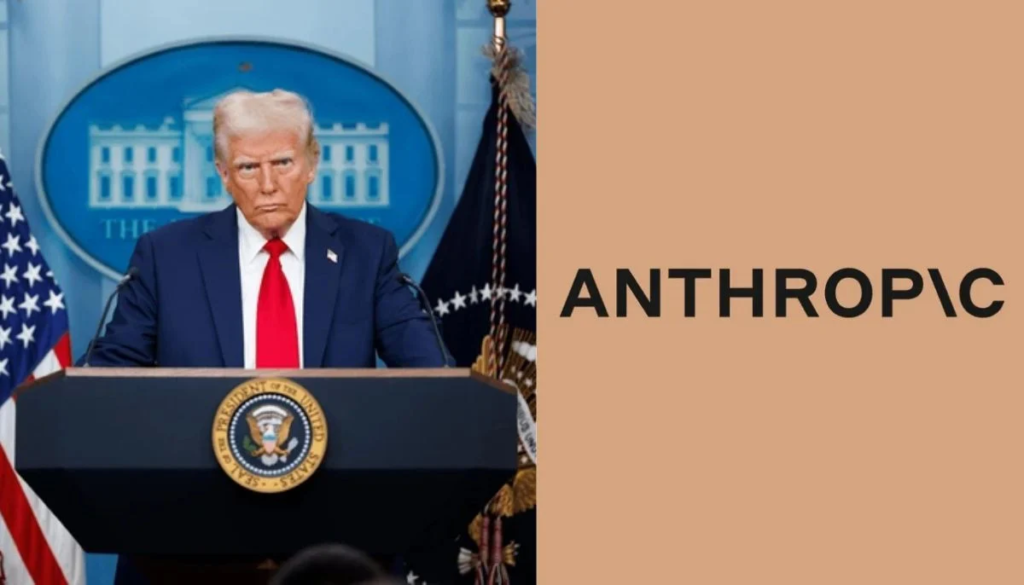
In response, Anthropic is suing the Pentagon over the decision. So far, a US judge has ruled that the Pentagon’s directive cannot be enforced while the case continues, meaning government agencies and military partners are still allowed to use Anthropic tools in the meantime. The legal battle highlights how AI vendors and state institutions are still negotiating where to draw the line between innovation and risk.
Reactions From Finance, Tech And Government Leaders
Leaders from finance, technology and government sectors had already been anxious about the public rollout of Mythos and Fable. Some were invited to test the system earlier this year, with Anthropic allowing a limited group of organisations to explore how the tool behaved in realistic scenarios before full release.
Their main concern is that a very strong model could be used to automate parts of cyber‑attacks, financial fraud or other harmful activities if guardrails fail. On the other hand, supporters argue that advanced AI can also be used to detect attacks, patch vulnerabilities and improve digital defences. This tension between offensive and defensive use is at the heart of the current debate.
What This Means For The Future Of Powerful AI Models
The suspension of Claude Fable 5 and Mythos 5 sends a clear signal to the wider AI industry: as models become more capable, regulators and security officials will intervene more often and more forcefully. Companies can no longer assume that a new flagship model can go straight from private testing to global deployment without regulatory friction.
Going forward, firms working on frontier AI will likely face:
- Stricter security testing and third‑party audits before launch
- Tighter controls on who can access the most capable systems
- More detailed reporting requirements to national security bodies
At the same time, governments will need clearer standards for what counts as an unacceptable security risk, and how to compare one company’s model to another’s. Without transparent rules, decisions can look political or arbitrary, which can damage trust on both sides.
Key Takeaways For Businesses And AI Users
For businesses and professionals who rely on AI tools, the sudden shutdown of Fable 5 and Mythos 5 is a reminder not to become dependent on a single model or provider. Diversifying tools and keeping backup workflows can reduce disruption if a model is paused or restricted.
It also underlines the importance of basic cybersecurity hygiene. Even without advanced AI, many attacks succeed because of unpatched software, weak passwords or poor internal procedures. While AI may change the speed and scale of attacks, it does not replace the need for strong fundamentals in digital security.