Introduction:
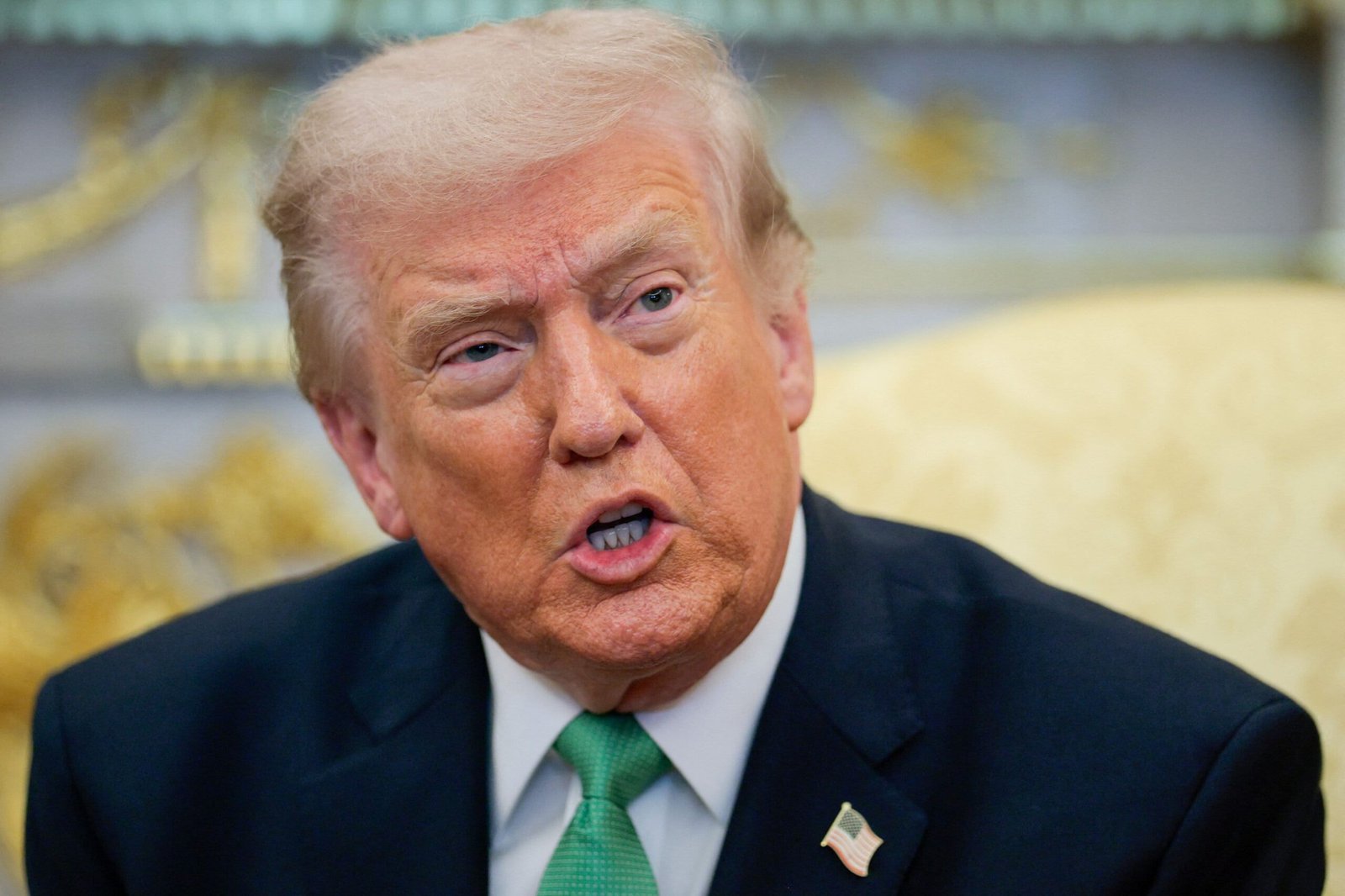
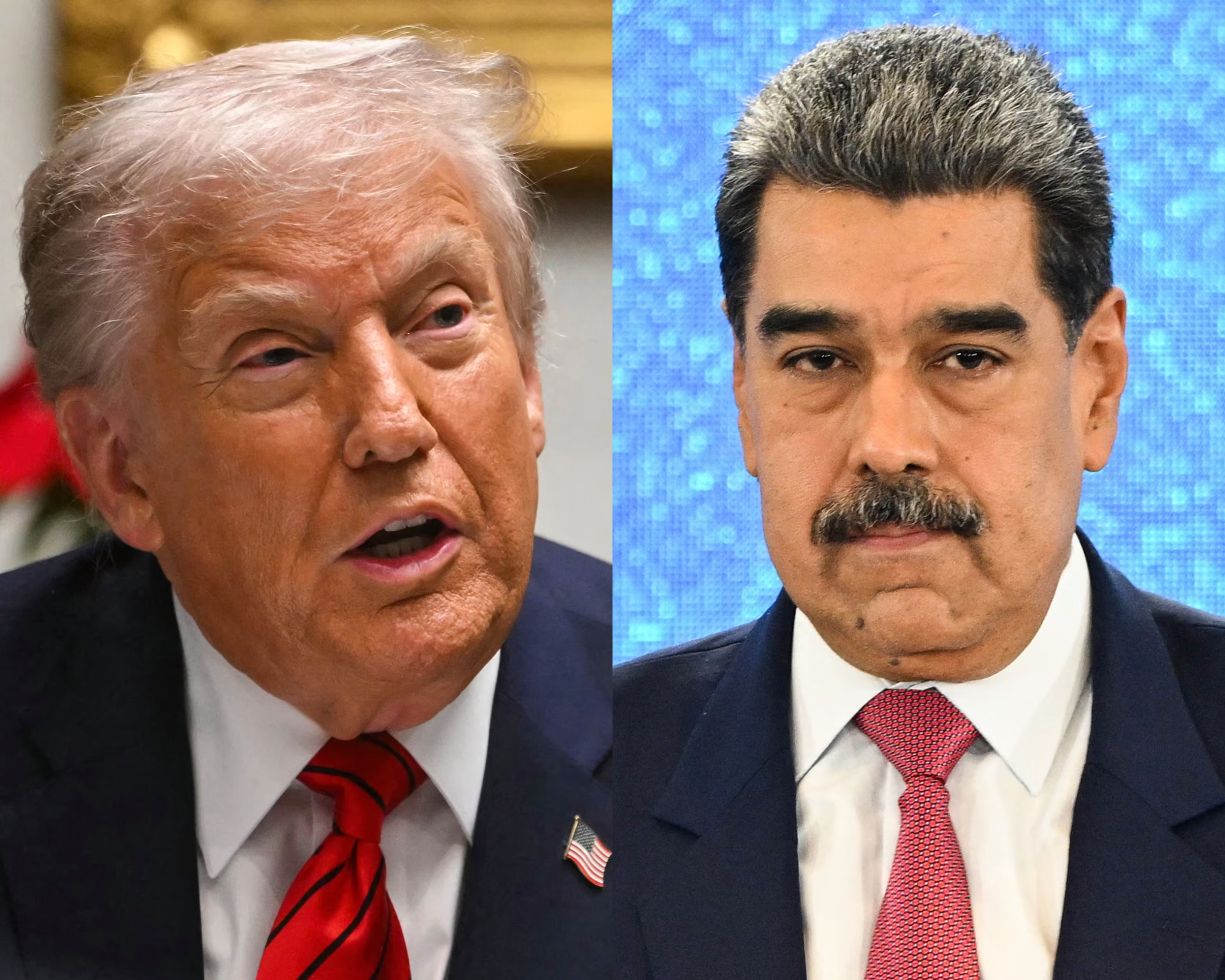
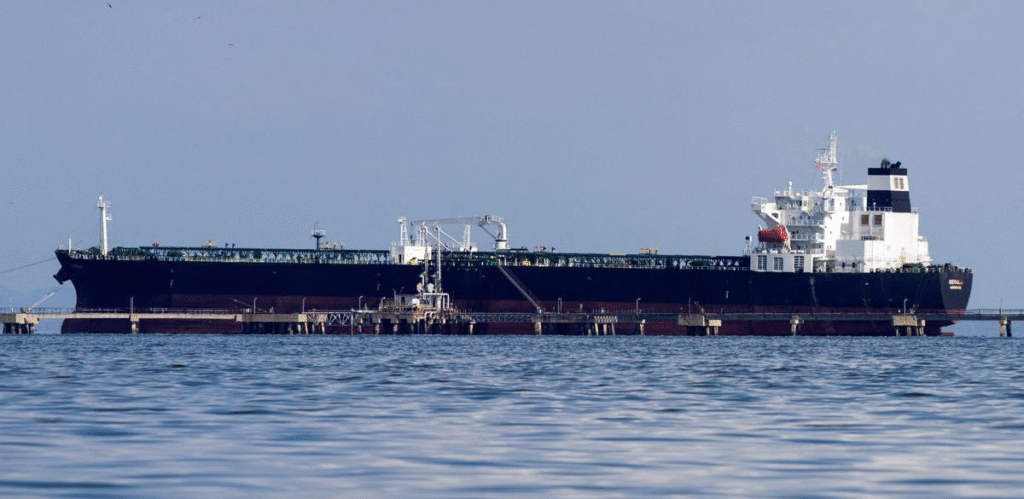
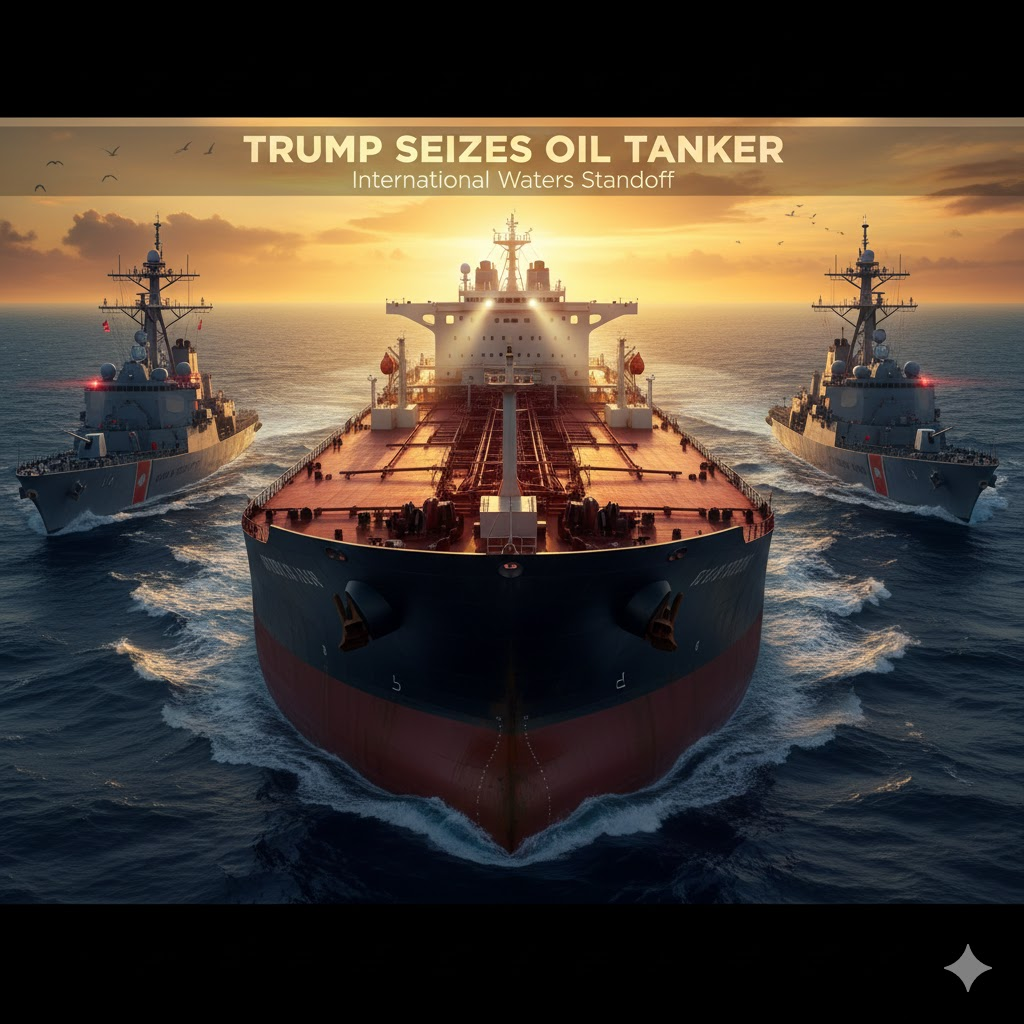
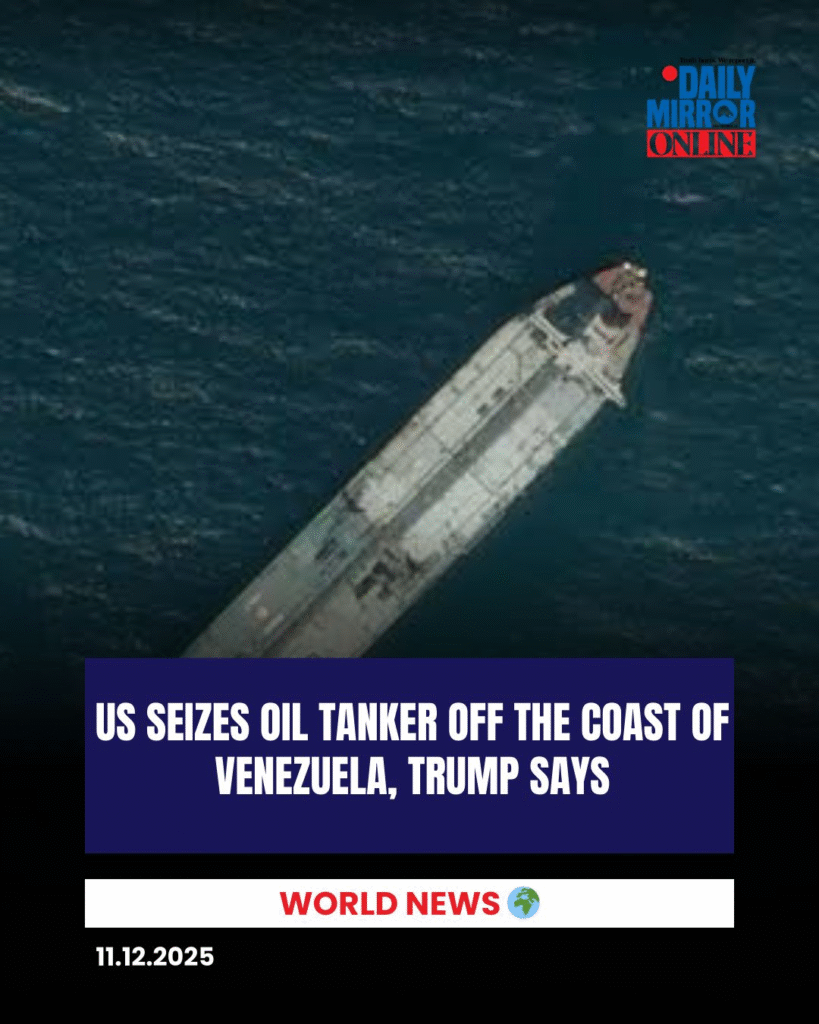
Trump seizes oil tanker off Venezuela and again puts the country at the centre of global headlines. The tanker was taken by US forces near the Venezuelan coast as part of Washington’s pressure campaign on President Nicolas Maduro and his oil‑dependent government. Officials say the ship was already under sanctions and linked to previous flows of restricted oil, while critics warn that this latest step could increase tension and risk in the region.
Why Trump Seizes Oil Tanker Off Venezuela
Trump seizes oil tanker off Venezuela as part of a wider pressure campaign that targets the country’s main source of money: oil exports. US officials say the ship was linked to sanctioned networks that help Venezuela sell crude on the global market despite years of restrictions on its state oil company.
By going after a vessel at sea instead of just bank accounts on paper, the administration wants to show that it can enforce sanctions in a direct and visible way. Supporters argue this sends a strong message to ship owners, traders, and insurers that dealing with restricted Venezuelan oil is risky and could lead to seizure or fines.
What We Know About The Seized Oil Tanker
Reports say the seized ship was sailing close to Venezuelan waters when US forces moved in, under a legal order connected to existing sanctions. The tanker is believed to have carried crude or fuel products tied to deals that Washington considers illegal under its rules on Venezuela’s oil trade.
Authorities have not shared every detail in public, but early information points to a vessel that may have changed flags, names, or shipping routes more than once to hide its true activity. This pattern is common in “dark” oil trading, where ships turn off tracking signals or use complex ownership structures to avoid detection by regulators.
How Venezuela Reacts To Trump Seizing The Oil Tanker
Venezuelan officials quickly condemned the move, calling it an act of aggression and theft of national resources. The government argues that its oil exports are legal and that Washington is using sanctions and seizures to try to force political change in Caracas.
State media in Venezuela present the event as proof that outside powers are trying to strangle the country’s economy. At the same time, critics of Maduro inside Venezuela say the crisis is also the result of years of corruption and mismanagement in the oil sector, which have left the country more vulnerable to outside pressure.
Impact On Oil Markets And Prices
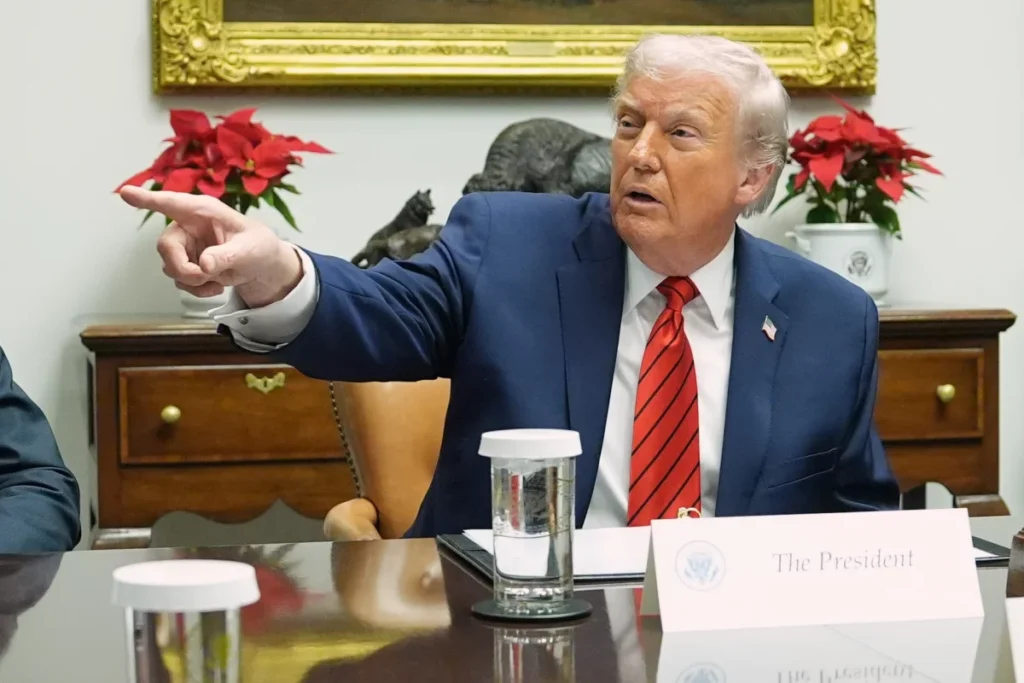
When Trump seizes oil tanker off Venezuela, traders pay attention because any disruption in supply can affect sentiment in the global oil market. Venezuela’s output is far below its past levels, but it still plays a role in heavy crude supply and some regional fuel flows.
If more tankers linked to Venezuelan exports are targeted, shipping costs and risk premiums for similar routes could rise. That may push some buyers to look for alternative sources, while opportunistic traders try to profit from price swings and changing trade patterns.
What This Means For US–Venezuela Relations
The seizure deepens the long‑running clash between Washington and Caracas. For years, the US has used sanctions, diplomatic pressure, and support for opposition figures to push for democratic change and new elections in Venezuela.
By adding a high‑profile operation at sea, Trump seizes oil tanker off Venezuela in a way that is meant to show strength to his domestic audience and to allies who also criticise Maduro’s rule. However, it also makes it harder to imagine quick talks or compromise, since each side now accuses the other of crossing new lines.
Regional And Global Political Reactions
Nearby Latin American countries are watching closely because they fear more instability around Venezuela could spill over borders through migration and smuggling. Some governments that oppose Maduro quietly welcome stronger enforcement of sanctions, while others worry that open confrontation could hurt regional trade and security.
Outside the region, states like Russia, China, or Iran, which have links with Venezuela’s energy and financial sectors, may see the seizure as another example of US overreach. Their reaction will matter, because they can provide alternative finance, equipment, or buyers for Venezuelan oil, even as Washington tries to cut those channels.
What Could Happen Next
Analysts see a few possible paths after Trump seizes oil tanker off Venezuela. One option is that the US builds legal cases and tries to auction or repurpose the seized cargo and ship, as it has done in past sanction cases involving Iran or North Korea.
Another option is a cycle of tit‑for‑tat steps, where Venezuela or its partners respond with their own moves, such as legal claims, arrests of foreign staff, or closer military ties with US rivals. A third path, less likely in the short term, would be some form of negotiation where sanctions relief is traded for political or electoral changes inside Venezuela.
How This Affects Ordinary People
Behind the headlines, the people who feel the pressure most are ordinary Venezuelans already living through high inflation, shortages, and a weak job market. If oil exports face more problems after Trump seizes oil tanker off Venezuela, government income could shrink again, putting more strain on public services and imports of food and medicine.
For people in the wider region, further economic decline in Venezuela could mean new waves of migration and more tension at borders. This is why humanitarian groups say any decision on sanctions or seizures should consider not only political goals but also basic needs on the ground.
Conclusion:
Trump seizes oil tanker off Venezuela in a way that clearly shows how closely politics, oil, and ordinary lives are tied together. This single move has raised tension with the Maduro government, shaken regional partners, and added new uncertainty for global energy markets and future talks on sanctions. For now, the seizure looks less like a one‑off headline and more like another step in a long struggle over who controls Venezuela’s resources and which path the country will take.