Introduction: Trump and Takaichi’s Historic Alliance
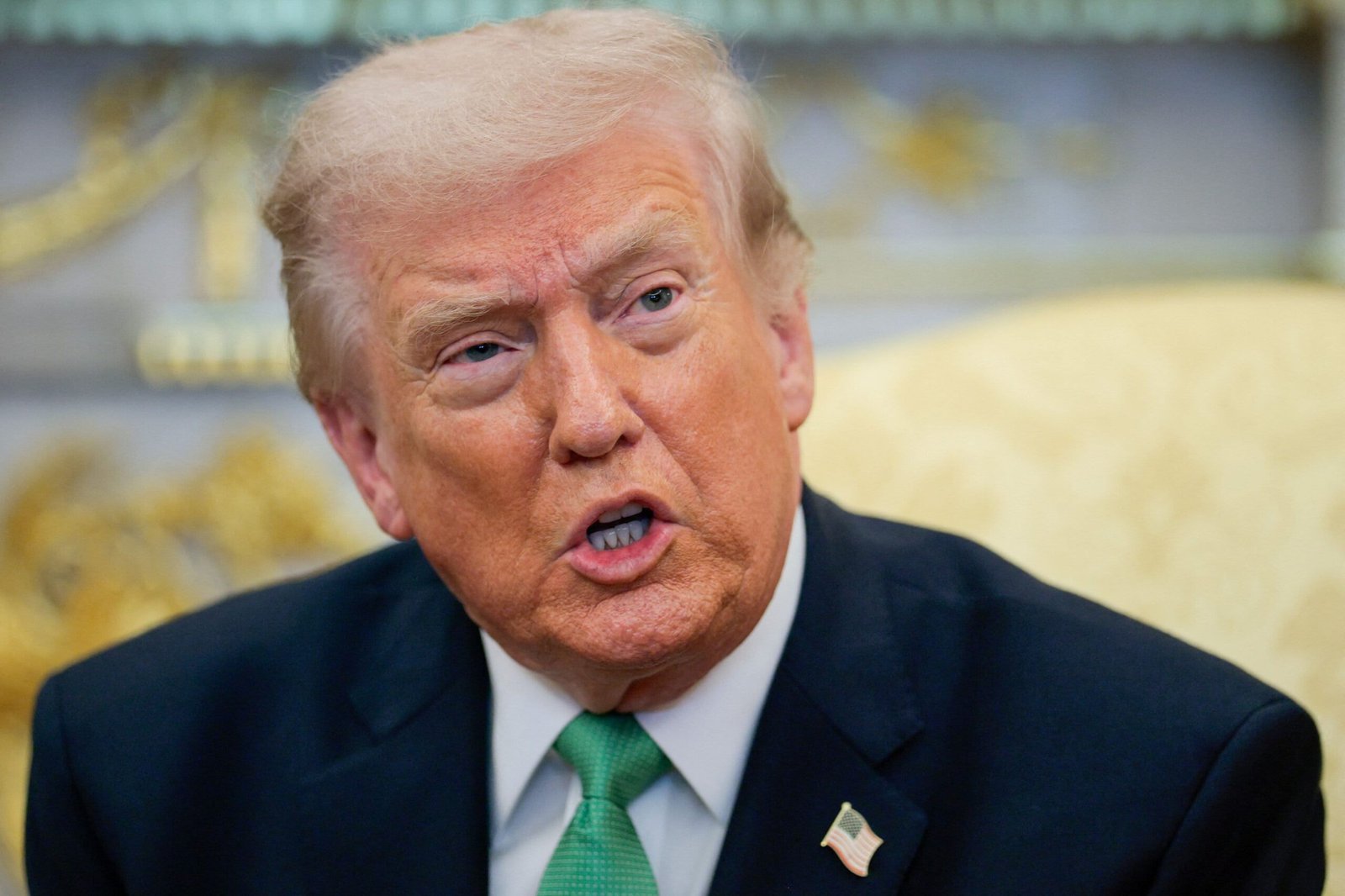
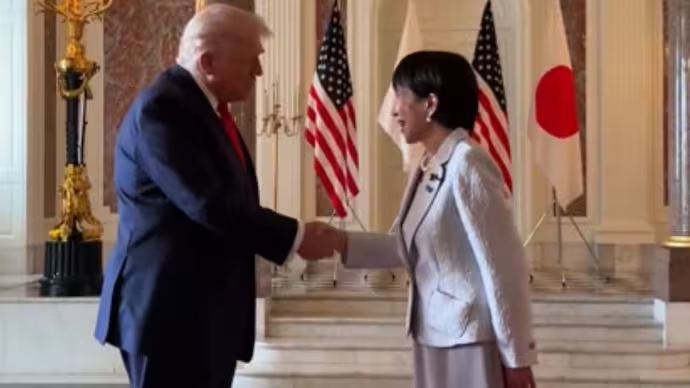
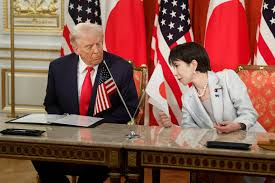
Trump Japan Alliance 2025 headlines dominate the USA political news. U.S. President Donald Trump has signed a groundbreaking pact in Tokyo with Japan’s new Prime Minister, Sanae Takaichi. The $550 billion agreement covers trade, military security, and rare earth supply chains, cementing strategic ties between the two nations.
Key Updates on the USA Political Landscape
- The U.S. and Japan’s new Golden Age agreement confirms robust economic growth and defense advancement.
- Trump praised Japan’s first female PM, stating this relationship will “set a global standard for peace and prosperity”.
- A federal government shutdown looms, threatening funding for millions. Debate intensifies in Congress over SNAP benefits and child care programs.
- White House withdraws a top State Department nominee amid controversy over past military ties and troop deployment strategy.
- Democratic leaders and federal workers clash on reopening the government without additional healthcare provisions.
Details of the $550B Trade and Security Agreement
Prime Minister Takaichi committed to rapid investment in American industries, including:
- Purchasing U.S. pickup trucks, soybeans, and natural gas
- Collaborations in shipbuilding and technology
- Defense spending aligned with the two percent GDP target set by previous Japanese leaders
How the Pact Impacts America’s Economic and Military Strength
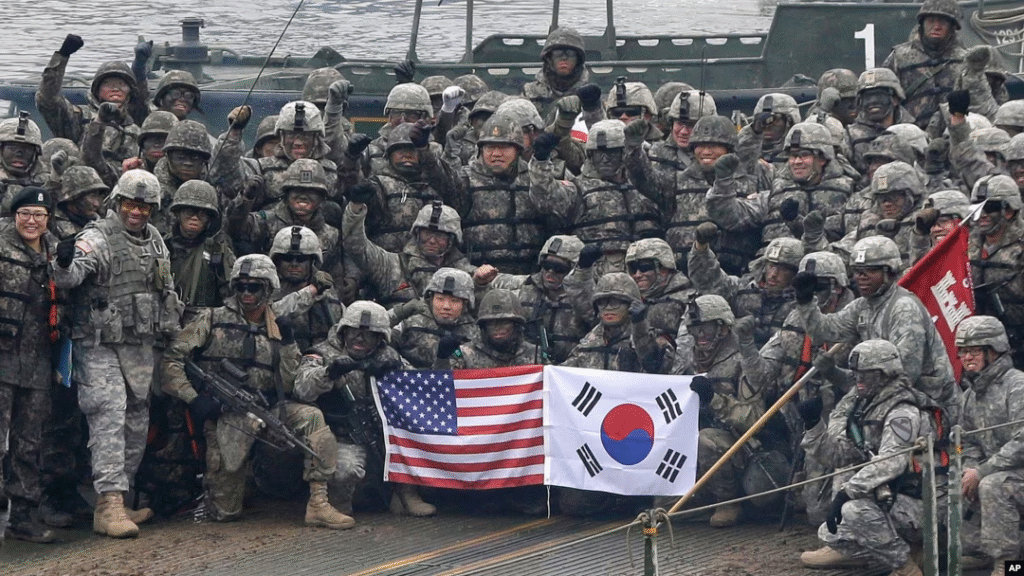
The deal ushers in strategic military enhancement and stronger supply chains for rare earth elements, which are critical for high-tech manufacturing. Trump emphasized “peace through strength” in his address to U.S. troops based in Japan, promising to protect allied interests and bolster security across the Indo-Pacific region.
Latest Federal Shutdown Tensions
- Shutdown effect: Tens of millions may soon lose food and utility assistance if the government remains closed.
- SNAP (food assistance) funding is scheduled to run dry, pressuring lawmakers to negotiate a compromise.
- Major employee union breaks with Democrats, pushing to end the shutdown without additional health care measures.

Antipoverty Program Risks Amid Shutdown
With budget disagreements escalating, federal programs for child care, nutrition, and basic utilities face suspension. Hunger and cold risk surging for low-income families, as Congress races to restore spending authority.

International Reactions to US Policy
Our allies respond to the USA’s strengthened position:
- Japan: Welcomes U.S. investments, increased technology cooperation, and defense assurances.
- Russia: Faces new Treasury sanctions following missile tests and continued war in Ukraine; U.S. sanctions target major Russian oil companies, aiming to curb the Kremlin’s war funding.

Expert Opinions and Analysis
Analysts say Trump’s focus on security and economic alliances is reshaping U.S. global posture. The “Trump Japan Alliance 2025” headline signals a pivot toward Indo-Pacific cooperation, military preparedness, and bold diplomatic engagement. Experts recommend monitoring federal spending and trade developments in the coming weeks for further impact.

Historical Context: The Evolution of US–Japan Relations
The alliance between the United States and Japan has been foundational to peace in the Asia-Pacific for decades. Historically, economic cooperation and mutual defense agreements have formed the backbone of bilateral ties. The 2025 trade and security pact marks a new chapter, building on previous treaties, joint exercises, and shared visions for technological growth. Prime Minister Sanae Takaichi’s leadership signals a bold era, as she navigates regional complexities alongside President Trump. The renewed partnership aims to counter emerging threats and maintain stability, especially in light of growing competition from China and North Korea’s unpredictable policies.
Domestic Reactions: How Americans View the Pact
Across the United States, reaction to the deal has been mixed. Supporters hail it as a strategic move to secure jobs and defend democracy, with many pointing to the $550 billion figure as evidence of serious economic commitment. Labour unions and manufacturing advocates have praised the inclusion of auto, tech, and energy sectors, arguing it will create thousands of new American jobs. Critics, however, worry about impacts on domestic policy and resource allocation, especially as Washington faces a looming government shutdown.
Voters in key states like Ohio and Michigan—where manufacturing rules the local economy—express cautious optimism, noting that increased Japanese investment could revitalize local industries. Others remain wary, reminding lawmakers not to neglect social programs and environmental standards as international deals take center stage.
International Diplomacy and Strategic Impact
The new U.S.–Japan agreement has global ripples. European allies quickly congratulated both leaders, signaling support for enhanced security and open trade. Russia, facing fresh U.S. sanctions, condemned the pact as “provocative,” raising concerns about further escalation in Eastern Europe. China’s Foreign Ministry issued a statement noting increased American military presence in Asia but urging continued dialogue and cooperation to avoid destabilizing the region.
Indo-Pacific stakeholders, including Australia and South Korea, praised the deal for its clarity and strategic vision. Many analysts believe the pact will deter aggressive moves by rival powers, safeguard shipping lanes, and guarantee ongoing access to rare earth minerals crucial for high-tech manufacturing.
Rare Earth Supply Chains: Securing the Future
Rare earth elements—used in electronics, renewable energy, and defense technologies—remain central to the new alliance. America and Japan’s plan for joint investment in mining and refining is seen as a step to reduce dependence on imports from geopolitical rivals. Industry groups welcome the agreement, predicting exponential growth for U.S.-based rare earth suppliers. Environmental advocates highlight potential challenges but acknowledge the pact’s safeguards for sustainable extraction.
Economic Impact of the Trade Pact
The $550B deal brings direct investments to U.S. agriculture, manufacturing, energy, and technology. American companies are already preparing for increased exports to Japan, while U.S. ports anticipate higher traffic and expanded logistics networks. Technology firms expect joint ventures in fin-tech, AI, robotics, and cybersecurity. In the coming months, economists forecast steady GDP growth and increased market confidence as bilateral trade flourishes.
Financial markets have responded positively to the news, with stocks in the auto and tech sectors seeing measurable gains. Energy firms praise new LNG contracts, while agriculture experts predict record soybean exports.
Military Enhancement in the Indo-Pacific
Under the pact, joint US–Japan military exercises will expand, focusing on cybersecurity, maritime security, and coordinated defense strategies. New deployments of American and Japanese troops will secure critical infrastructure, respond rapidly to regional crises, and conduct advanced research into unmanned vehicles and intelligence systems. Military leaders expect improved readiness and deterrence capabilities, shielding allied interests against a volatile international backdrop.
Expert Opinions: What Comes Next?
Political scientists, military analysts, and business leaders continue to assess the full impact of the alliance. The consensus is that the “Trump Japan Alliance 2025” creates new opportunities and challenges—balancing diplomacy, economic growth, and security. Thought leaders urge Congress to resolve the shutdown swiftly, warning that domestic instability could weaken America’s position on the global stage.
Editorial: Reflection and Outlook
As news breaks and deals materialize, the world watches American politics with renewed interest. Trump’s latest move could reshape alliances, foster innovation, and redefine U.S. leadership abroad. Challenges remain, but history will mark the 2025 Tokyo pact as a milestone in international cooperation and strategic planning.
The Strategic Impact of the Trump Japan Alliance 2025
The Trump Japan Alliance 2025 is being discussed extensively among policymakers and international media. As analysts review the strategic outcomes, it is clear that the Trump Japan Alliance 2025 will shape global economic pathways and have a direct impact on technology, trade, and security policies for both nations. Many business leaders have expressed optimism about the future of U.S.–Japan cooperation, stating that the Trump Japan Alliance 2025 sets a new standard for bilateral agreements.
Furthermore, the significance of the Trump Japan Alliance 2025 has been highlighted in political debates and forums across the United States. Lawmakers point to the Trump Japan Alliance 2025 as evidence of America’s renewed commitment to its allies, while commentators note that the Trump Japan Alliance 2025 is likely to inspire similar partnerships around the globe. As a pivotal development in 2025, the Trump Japan Alliance 2025 remains at the center of national and international discussion.
Conclusion: What’s Next in USA Politics?
The USA is at a crucial crossroads. Political courage, diplomatic deals, and a resilient economic agenda define current news. As President Trump and PM Takaichi lead the way, keep your eyes on Congress and global reactions—where every new headline marks another turning point in American history.