Satellite data pushes fundamental laws of physics to their limits
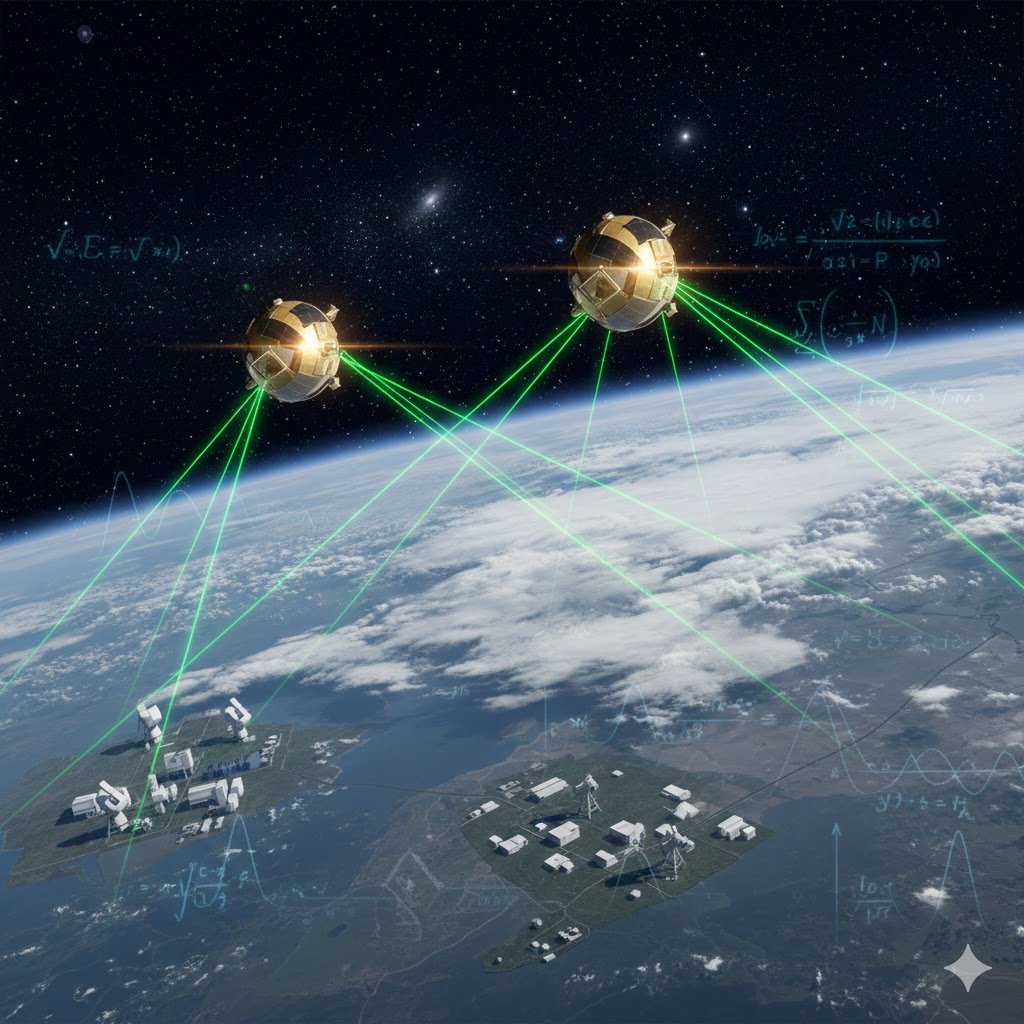
A new analysis of long-term satellite measurements has allowed scientists to test one of the most important symmetries in physics with unprecedented precision. By studying almost 30 years of orbital data from the LAGEOS and LAGEOS II satellites, researchers have shown how satellite data pushes fundamental laws of physics such as Einstein’s General Relativity to their limits.
The team focused on Local Lorentz Invariance, a principle that says the laws of physics should look the same no matter how fast you move or in which direction. Any violation of this symmetry would be a major sign that the current theory of gravity is incomplete and that new physics might be hiding just beyond today’s experiments.
What are scientists testing?
The study examines a quantity called the post‑Newtonian parameter α1, which appears in a framework used to test gravity theories in weak fields like those around Earth. In standard General Relativity, α1 should be exactly zero, meaning spacetime does not prefer any particular direction.
If α1 were not zero, it would suggest that the fabric of spacetime has a preferred frame, possibly linked to the motion of the universe itself through the cosmic microwave background radiation. That would challenge the fundamental idea that all directions in the universe are physically equivalent.
By analysing how satellite data pushes fundamental laws of physics in this way, the researchers are trying to detect any tiny signs that spacetime behaves differently along specific directions.
How LAGEOS satellites help test gravity
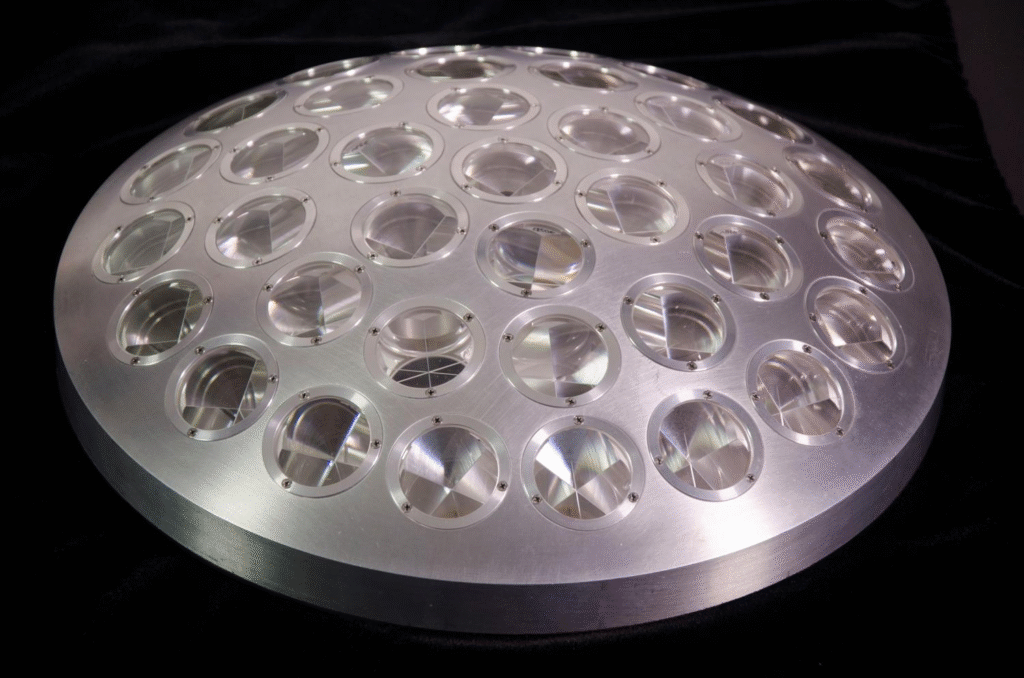
LAGEOS and LAGEOS II are passive, dense satellites covered with retroreflectors, allowing ground stations to measure their positions very precisely using Satellite Laser Ranging. In this method, lasers are fired from Earth, bounce off the satellite and return to the station, giving extremely accurate distance measurements.
Over nearly three decades, these measurements build a detailed record of each satellite’s orbit, including subtle changes in its path. The new study looks closely at the mean argument of latitude, a parameter that combines aspects of the orbit’s shape and position, to see whether it drifts in a way that could be linked to a preferred frame of reference.
Researchers used advanced orbit reconstruction techniques and carefully modelled non‑gravitational forces, such as thermal thrust and radiation pressure, to avoid mistaking ordinary effects for new physics.
New, tighter limits on the post‑Newtonian parameter α1
The analysis used a phase‑sensitive detection method, effectively “locking on” to the specific pattern that a non‑zero α1 would produce in the satellite orbits. This approach, supported by synthetic-data tests, helped separate the tiny signal being searched for from other gravitational and non‑gravitational disturbances.
These results show how satellite data pushes fundamental laws of physics by ruling out a wider range of possible deviations from General Relativity.
Why this matters for the future of physics
Although the new constraint does not reveal a break in General Relativity, it makes the theory pass yet another demanding test. At the same time, it narrows the space in which alternative gravity models that predict Lorentz violation can operate.
For theorists, such precise limits are crucial for building or ruling out ideas that add extra vector or tensor fields to gravity. For experimental physicists, the study highlights the power of long‑term satellite tracking, careful orbit modelling and laser ranging as tools to probe the structure of spacetime.
Future work may combine even longer observation periods, improved models of Earth’s gravity field and additional satellites to push these tests further. In this way, satellite data pushes fundamental laws of physics closer and closer to their breaking point, giving scientists a sharper view of where our current understanding may eventually need to change.