1. Why Russia’s New START Decision Matters
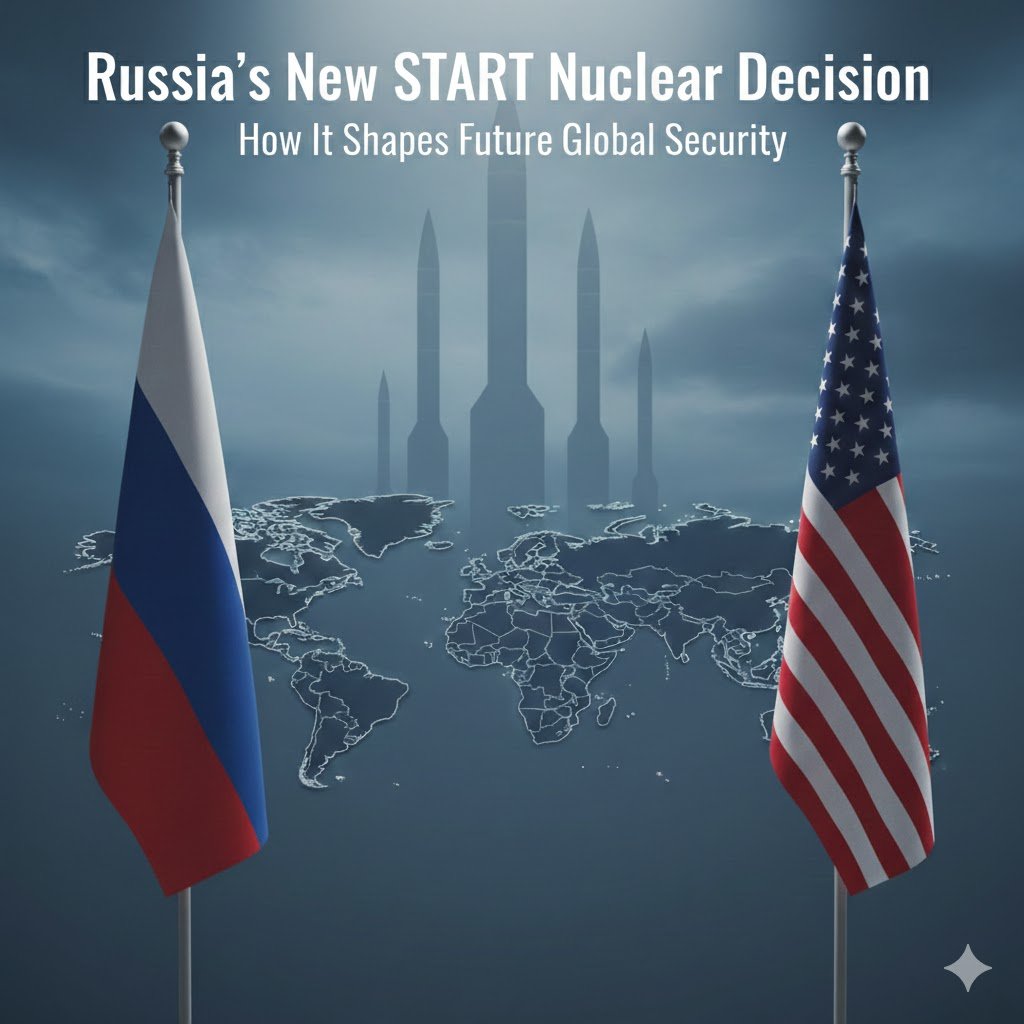
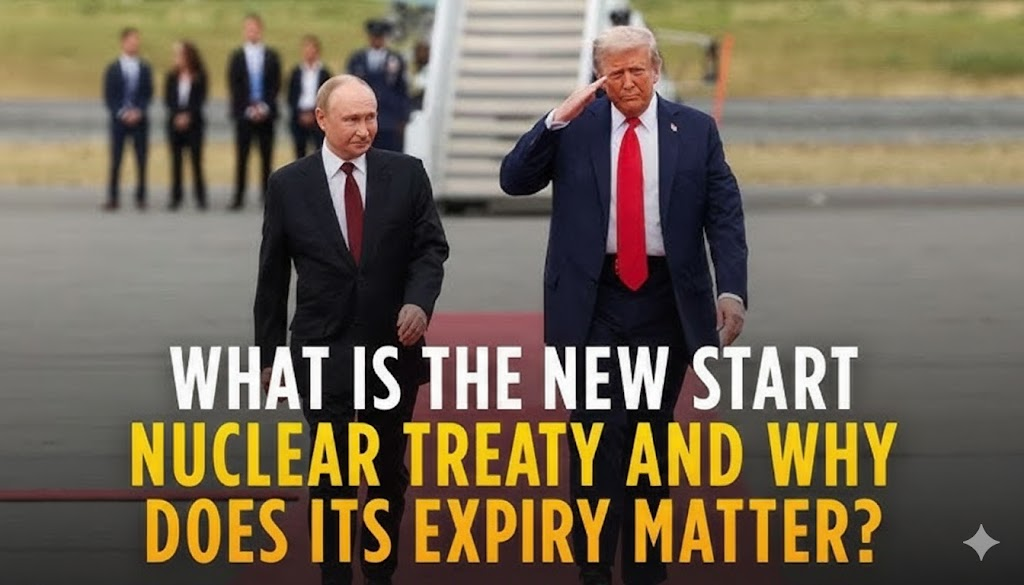
Russia has said it will keep its nuclear forces within the limits of the expired New START nuclear treaty, but only on the condition that the United States does the same. This conditional move shows that Moscow does not want an immediate nuclear arms race, yet it also exposes how fragile global security has become without a binding treaty.
2. What the New START Nuclear Treaty Did
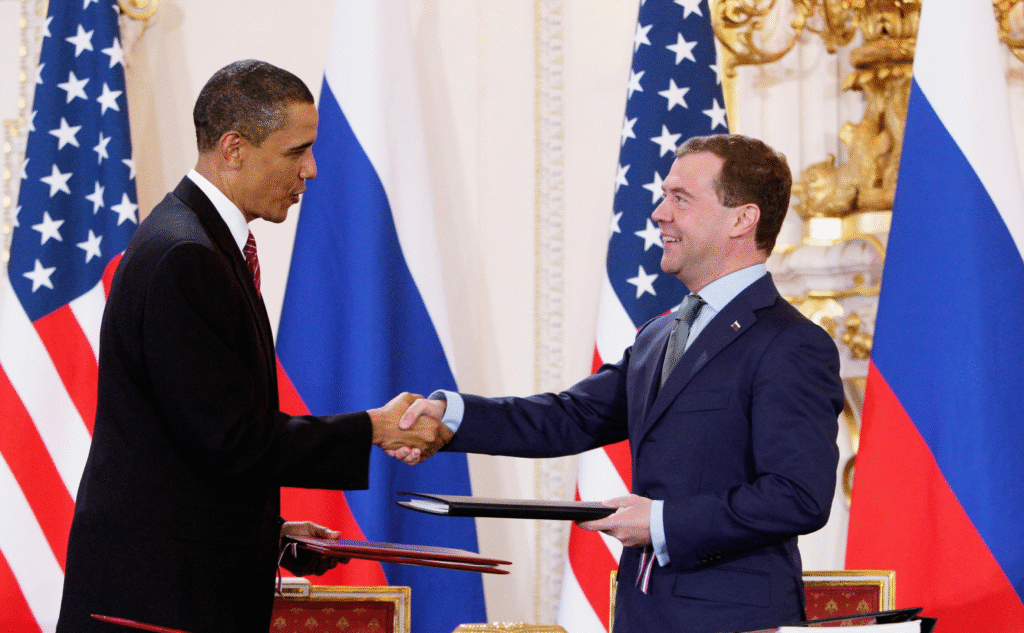
The New START nuclear treaty, signed in 2010, placed strict caps on the number of deployed strategic nuclear warheads and delivery systems that both Russia and the United States could keep ready for use. Each side was limited to 1,550 deployed strategic warheads and no more than 700 deployed intercontinental missiles and heavy bombers. The treaty also created a detailed verification system with inspections and data exchanges, which helped build trust and reduce the risk of miscalculation.
3. How the Expiry Changed the Global Nuclear Balance
The treaty expired on 5 February 2026, ending the last remaining legally binding arms control agreement between the two largest nuclear powers. For the first time in more than 50 years, there are no enforceable legal limits on US and Russian strategic nuclear arsenals. This opens the door for both sides to expand their nuclear forces if they choose, raising fears of a new arms race.
4. Russia’s Conditional Promise To Respect Old Limits
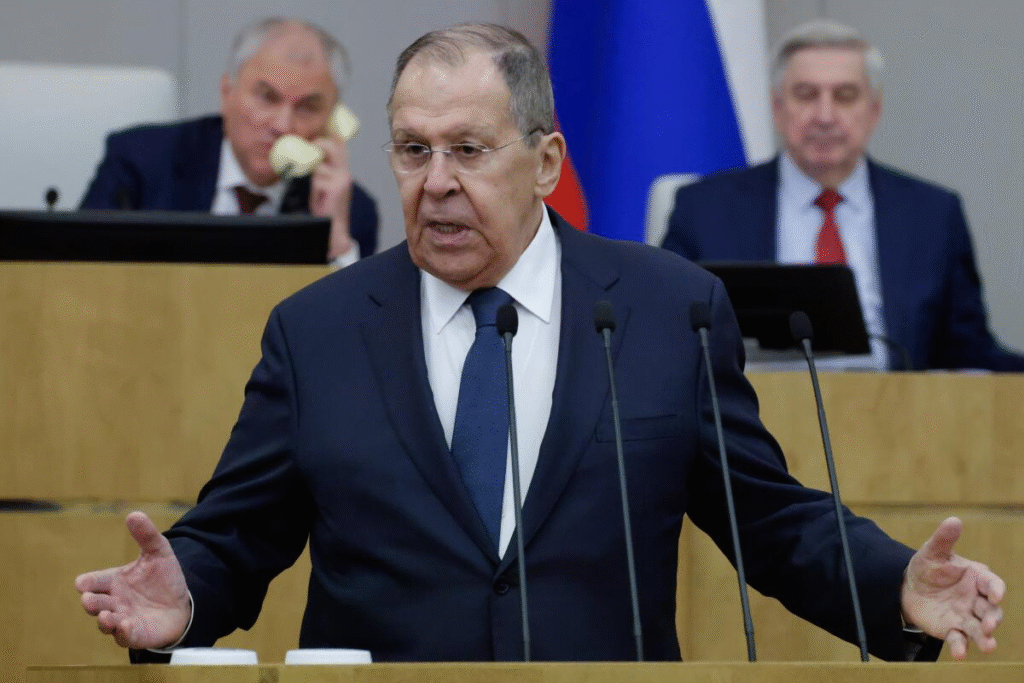
After the expiry, Russian officials repeated that Moscow would continue to respect the numerical limits that existed under New START as long as Washington did not exceed them. Foreign Minister Sergey Lavrov described this as a unilateral moratorium, meaning Russia is choosing on its own to follow the old caps while monitoring US behavior. This is a political commitment, not a legal obligation.
5. How the United States Views the Situation
The United States has rejected a simple extension of New START in its original form and instead talks about a broader and more modern nuclear agreement. Washington wants any future deal to cover new technologies, more types of weapons and, ideally, additional nuclear‑armed states. However, there is currently no clear timetable or detailed plan for negotiating such a replacement agreement.
6. Impact on the Global Non‑Proliferation System
When the New START nuclear treaty ended without a new deal ready to replace it, it weakened confidence in the wider non‑proliferation regime. The Nuclear Non‑Proliferation Treaty is based on a bargain that nuclear‑armed states will keep working towards disarmament, while others agree not to seek nuclear weapons. If the two biggest nuclear powers allow their main arms control treaty to lapse, it becomes harder to convince other countries to keep trusting that bargain.
7. Rising Tensions, Ukraine and Suspended Inspections
Russia’s conditional respect for New START‑style limits is happening during a period of high tension, especially over the war in Ukraine. Moscow previously suspended inspections under the treaty, arguing that Western support for Kyiv and broader political hostility made normal arms‑control cooperation impossible. Even if both sides stay roughly under the old caps, the loss of on‑site inspections and routine verification increases mistrust and uncertainty.
8. Role of China, US Allies and Other Nuclear Powers
The United States argues that any future nuclear arms control framework should include China, whose arsenal has been growing in recent years. Russia responds that if the framework is going to expand, it should also include US allies such as the United Kingdom and France, which also possess nuclear weapons. These different positions show how much more complex modern arms control is compared with the Cold War, when only Washington and Moscow were at the center.
9. Are We Safer If Russia Sticks to New START Limits?
For ordinary people around the world, the main question is whether Russia sticking to New START nuclear treaty limits after expiry actually makes the world safer. As long as both sides voluntarily keep their deployed strategic warheads and launch systems near the former caps, the risk of a sudden quantitative breakout is lower. However, because there is no legal treaty, no enforcement and weaker verification, this stability depends only on political will and could change quickly if relations worsen.
10. Why These 9 Facts Matter for the Future
In simple terms, Russia’s pledge to respect the limits of the expired New START nuclear treaty, if the United States does the same, is a temporary safety net rather than a permanent solution. It slows down the immediate risk of uncontrolled nuclear expansion but cannot replace a strong, verifiable and inclusive arms control agreement. Policymakers and citizens alike will be watching to see whether this fragile voluntary restraint can evolve into a new treaty that restores firm and reliable limits on the world’s most powerful nuclear forces.