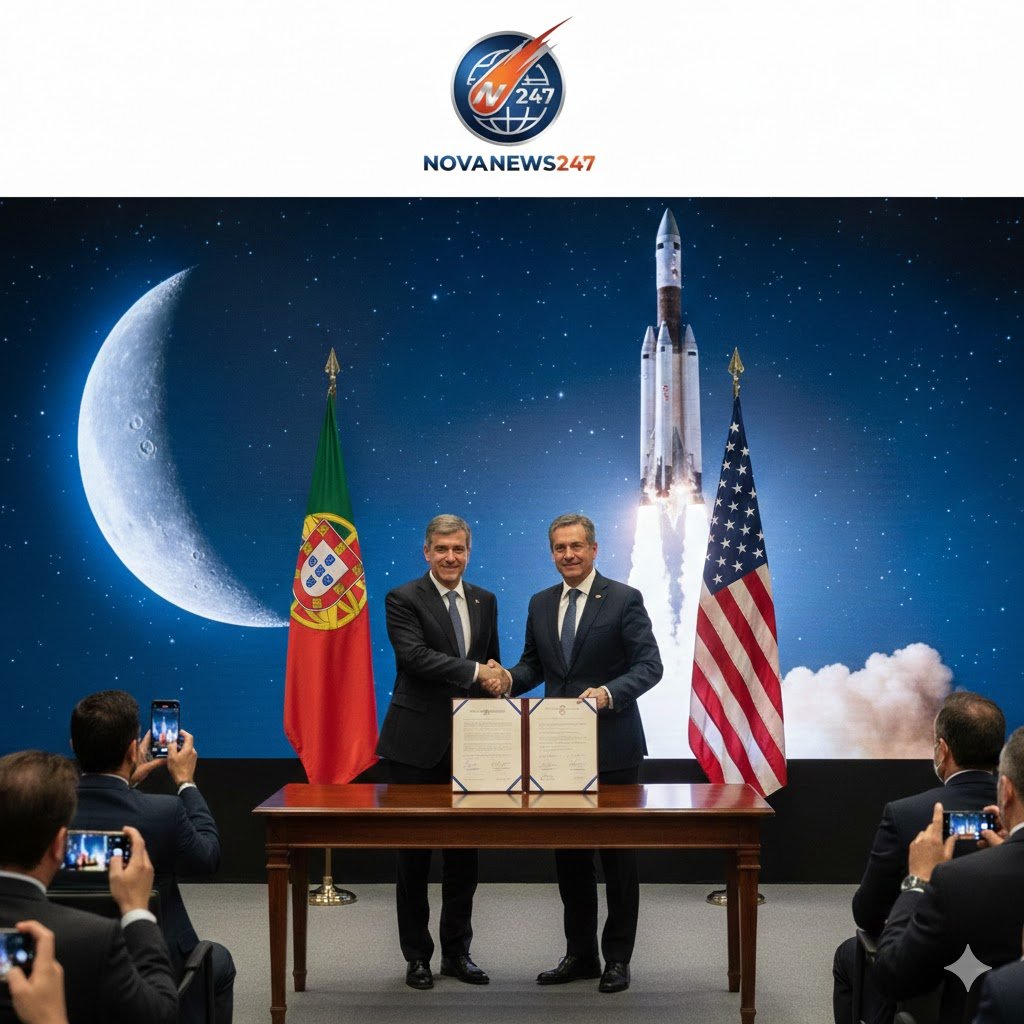
Portugal signs Artemis Accords: key highlights
Portugal signs Artemis Accords and becomes the 60th country to join this global framework for responsible space exploration. The signing took place in Lisbon during a regular meeting between the United States and Portugal focused on bilateral cooperation.
- The U.S. State Department welcomed Portugal’s decision and called it an important step in expanding the partnership into outer space.
- As a committed NATO ally, Portugal is now adding space collaboration to its existing security and scientific ties with the United States.
What are the Artemis Accords?
Before looking at why Portugal signs Artemis Accords, it is important to understand what these accords are. The Artemis Accords are a set of principles that guide civil space exploration and the peaceful use of outer space, especially around the Moon and Mars.
- The accords support the Outer Space Treaty by turning its basic rules into practical guidelines for modern missions.
- Key ideas include transparency, peaceful use, sharing scientific data, helping others in distress, and preventing harmful interference in space activities.
The Artemis Accords also recognize that resource extraction in space, such as using lunar ice or soil, should follow international law and support safe and sustainable activities. They allow countries to announce “safety zones” around sites where they work, to reduce the risk of accidents while still respecting free access in space.
Why Portugal signs Artemis Accords matters
Portugal signs Artemis Accords at a time when more countries are joining this U.S.-led framework for future lunar missions. By becoming the 60th signatory, Portugal shows that it wants to take part in the next phase of space exploration in a serious and responsible way.
- Portugal’s leaders stressed that the country cares about space sustainability and wants to ensure that space activities benefit all humankind.
- The Portuguese Space Agency, which is still relatively new, sees the accords as a chance to grow its role in science, technology, and innovation.
NASA’s administrator praised Portugal’s move and described this period as a “Golden Age of Exploration,” linking modern missions to historic Portuguese explorers such as Magellan. For Portugal, this is not only a science decision but also a way to connect its maritime exploration history with a new era of space exploration.
How this strengthens U.S.–Portugal space cooperation
When Portugal signs Artemis Accords, it also deepens its strategic relationship with the United States beyond defense and diplomacy. The accords create a common language and shared rules for future projects involving NASA and Portuguese institutions.
- The U.S. State Department called the signing “a meaningful step forward for responsible space exploration” and stressed that shared principles keep space stable and safe.
- Joint work under the accords can include science missions, technology development, and training opportunities for Portuguese researchers and companies.
This closer cooperation may open doors for Portuguese universities, startups, and the national space agency to join international lunar and Mars-related projects. Over time, it can help build local skills, jobs, and innovation in the Portuguese space sector.
Portugal as the 60th signatory in a growing group
Portugal signs Artemis Accords after many other countries from Europe, Latin America, Asia, and Africa have already joined. Reaching 60 signatories shows how broad the support has become for these principles of safe and peaceful space exploration.
- In recent years, countries such as Belgium, Greece, Uruguay, Switzerland, Peru, and others have signed, bringing the total past 50 before Portugal’s move.
- Since the start of the current U.S. administration, several more nations, including Bangladesh, Finland, Hungary, Malaysia, Norway, Philippines, Senegal, and now Portugal, have joined the accords.
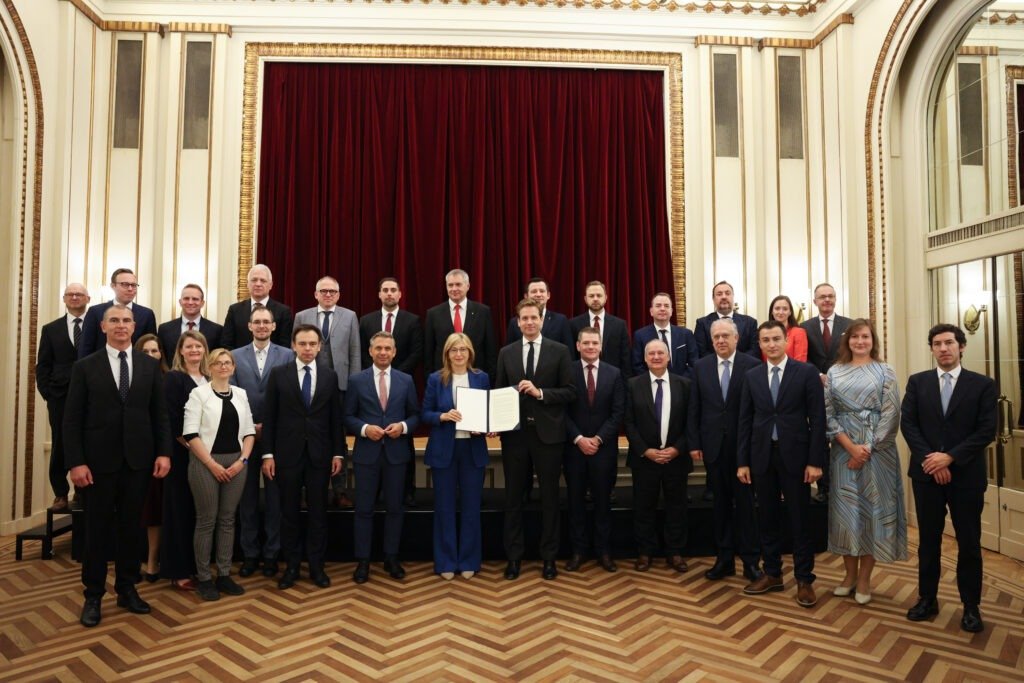
This wide participation means that when Portugal signs Artemis Accords, it is joining not a small club but a large and growing coalition. That coalition is shaping how future missions will operate on the Moon, Mars, and other destinations in a way that reduces conflict and encourages cooperation.
What Portugal gains by joining
Portugal signs Artemis Accords to secure both scientific and economic benefits for its people. By aligning with a major international framework, Portugal can better position itself for participation in lunar missions, space science projects, and technology partnerships.
- The accords give Portugal clear rules for how to work with NASA and other agencies on shared missions and experiments.
- Being part of a trusted framework can attract investment and encourage local companies to develop space-related products and services.
Leaders in Portugal have also emphasized that joining the accords matches the country’s values, including peaceful use of space, transparency, and protection of space heritage. This combination of values and opportunities helps explain why Portugal signs Artemis Accords at this moment.
Future of lunar exploration after Portugal signs Artemis Accords
Portugal signs Artemis Accords just as plans advance for humans to return to the Moon in the coming years through the Artemis program. According to Portuguese and U.S. officials, this next wave of missions will mark the beginning of a new era of exploration, similar in spirit to historic sea voyages but now reaching into space.
- The Artemis program aims not only to land astronauts on the lunar surface but also to build long-term capabilities, such as habitats and resource use systems.
- The accords provide the policy foundation so that these missions can be safe, transparent, and cooperative among many countries.

As more nations follow Portugal and sign the accords, the framework for peaceful lunar and Martian activities will become stronger. This increases the chance that exploration will remain focused on science, discovery, and shared benefit, rather than rivalry.