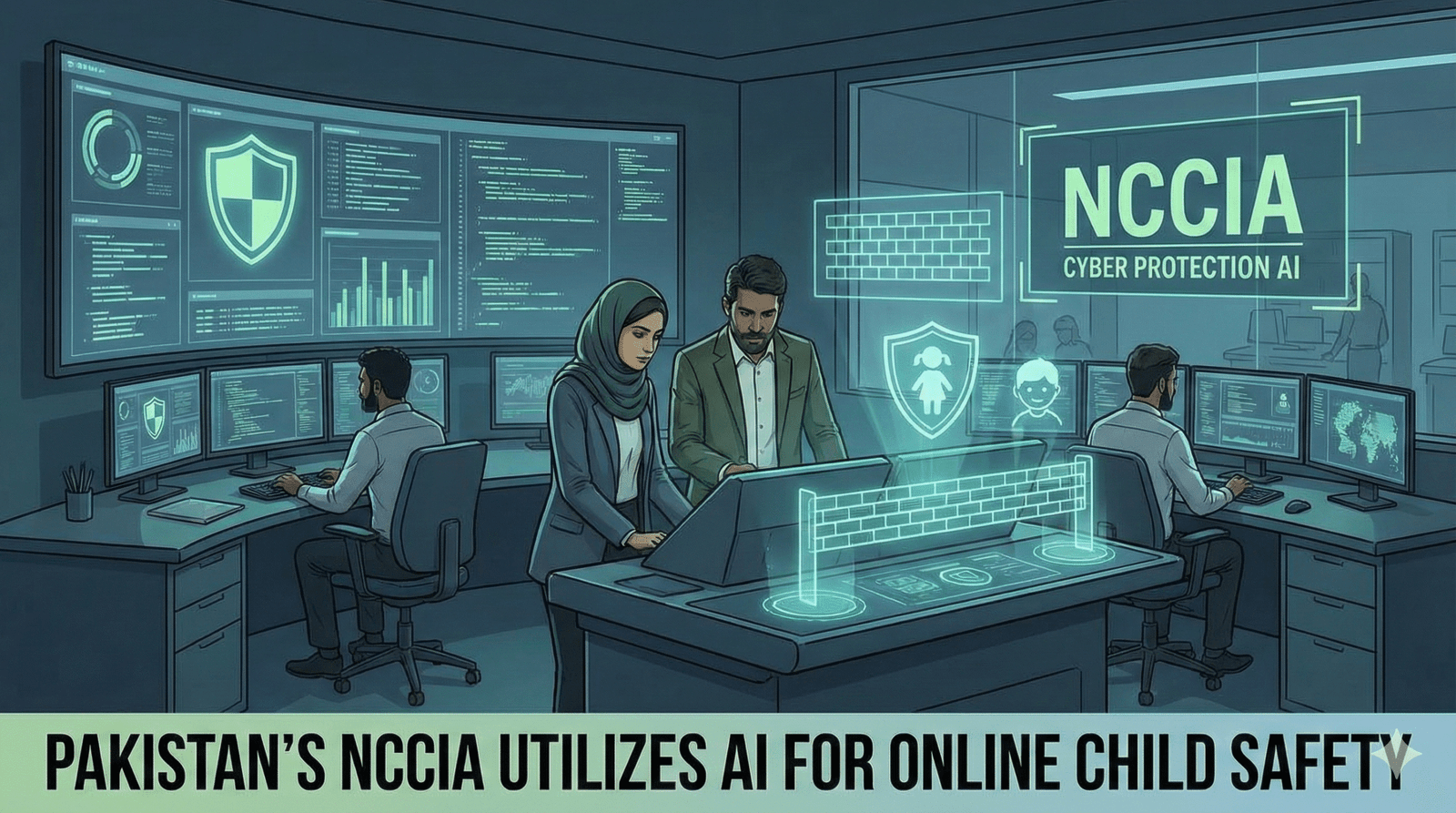
Pakistan has launched a powerful new AI tool called Katalyst to help investigate online child sexual abuse and exploitation. This system is designed to make the internet safer for children by helping law enforcement identify and catch online predators more quickly.
What Is the Katalyst AI System?
Katalyst is an AI‑enabled investigative system created for the National Cyber Crime Investigation Agency (NCCIA) in Pakistan. It uses artificial intelligence to detect, sort, and prioritise reports of online child sexual exploitation and abuse.
The technology was developed through a partnership between:
- Pakistan’s Ministry of Interior and Narcotics Control
- The UK‑Pakistan Serious Crime and Law Enforcement (UPSCALE) Programme
- The British High Commission in Pakistan
This international cooperation shows how modern digital tools can help make the online world safer for children.
Why Did Pakistan Need This Technology?
Online child sexual abuse and exploitation is a fast‑growing global crime. Criminals use social media, messaging apps, gaming platforms and websites to target children, share illegal content, and hide behind technology.
Before Katalyst, Pakistani authorities had limited capacity to process the growing number of reports linked to online child abuse. Many cases could be delayed or overlooked simply because investigators did not have strong digital tools or enough time.

How Does Katalyst Help Investigators?
The new system is built to make investigations faster, smarter, and more effective. It supports NCCIA in several important ways:
- Faster processing of reports
NCCIA receives referrals from the US‑based National Centre for Missing & Exploited Children (NCMEC). With the help of AI, the agency can now increase its capacity from reviewing around 1,200 referrals per month to over 100,000. - Better prioritisation of high‑risk cases
The system analyses data and helps identify the most urgent and high‑risk complaints first, so investigators can act quickly to protect children who may be in immediate danger. - Improved detection of patterns and networks
By using machine‑learning techniques, Katalyst can spot links between different cases, suspects, or online accounts, making it easier to uncover organised criminal networks, not just single offenders.
Government’s View on the New AI Tool
At the launch event in Islamabad, senior officials stressed that protecting children from online harm is a national responsibility. Pakistan’s Minister of State for Interior and Narcotics Control, Talal Chaudhry, said that adopting an AI tool like Katalyst reflects the government’s commitment to modernising law enforcement and bringing offenders to justice.
He also highlighted that policy and institutional reforms must keep pace with rapid technological change, especially when artificial intelligence is introduced into policing and investigations. The government has pledged to continue building NCCIA’s capacity and strengthening its response to cybercrime involving children.

NCCIA’s Role in Combating Online Child Abuse
The National Cyber Crime Investigation Agency is Pakistan’s specialised body for cybercrime investigations. Since its creation, NCCIA has handled a large number of complaints related to cyber offences, including online child exploitation, harassment, and fraud.
NCCIA’s Director General, Syed Khurram Ali, has said that protecting children from online harm is a core priority for the agency. With Katalyst and other AI‑based tools, NCCIA now has a much stronger technical base to track, analyse, and act on digital evidence of online child abuse.
International Support for Pakistan’s AI Efforts
British High Commissioner Jane Marriott called online child abuse a global challenge that crosses borders. She highlighted that child protection is a core UK priority and that supporting Pakistan’s use of AI in investigations is part of that mission.

Katalyst is part of the wider UPSCALE programme, which focuses on serious crime and law enforcement cooperation between the UK and Pakistan. The UK has committed to continue working with Pakistan to disrupt criminal networks and make the digital environment safer for children.
A Broader Strategy Beyond Technology
The Chairperson of the National Commission on the Rights of the Child (NCRC), Ayesha Raza Farooq, has called for a “whole‑of‑government” approach to tackling online child sexual exploitation and abuse. This means that advanced tools alone are not enough; strong laws, better coordination and awareness are also required.
NCRC is working with social media platforms, running public awareness campaigns, and pushing for a broader national policy to protect children online. Together with AI‑powered systems like Katalyst, these efforts aim to reduce online risks and support victims more effectively.
Why This AI Tool Matters for Pakistan
The launch of Katalyst is an important step for Pakistan in the fight against online child sexual abuse. It shows how an AI tool can be used for social good by helping authorities focus on the most serious cases and act quickly to protect vulnerable children.
At the same time, experts agree that technology must go hand in hand with education, awareness and strong institutions. Parents, teachers, policymakers, tech companies and communities all have a shared role in keeping children safe in the digital world.