Pakistan China Afghanistan terrorism: Simple explanation of joint call
Pakistan and China have together asked Afghanistan to take clear and strong steps against terrorist groups that are based in Afghan territory. They said these steps should be “visible and verifiable”, which means other countries should be able to see them and confirm that they are real.
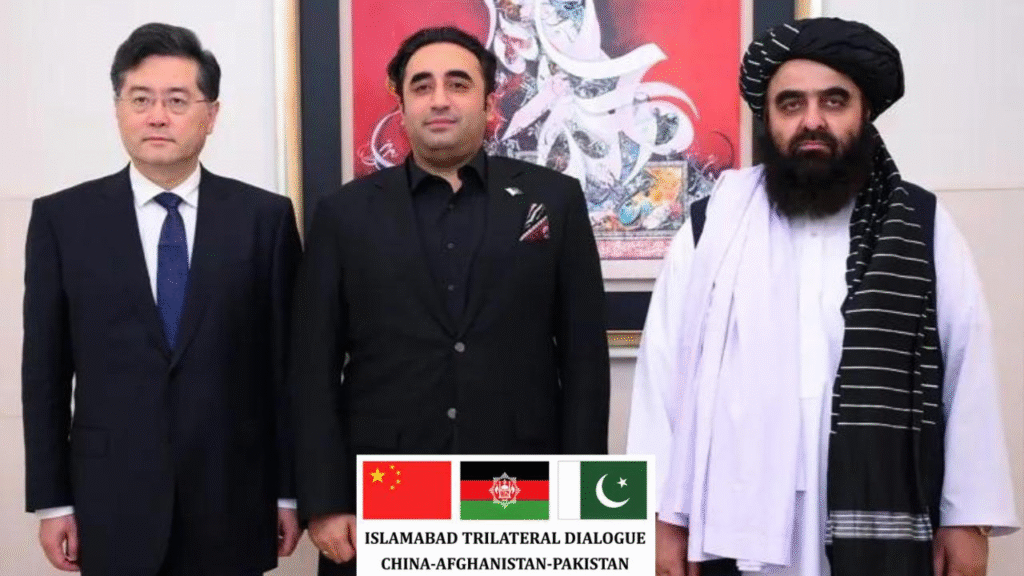
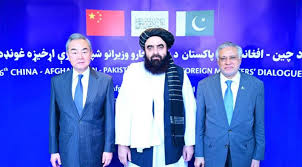
This joint message came after a high-level meeting in Beijing between Pakistan’s Deputy Prime Minister and Foreign Minister Ishaq Dar and Chinese Foreign Minister Wang Yi. In this meeting, they discussed security, trade, the situation in Afghanistan and many other regional issues.
Why Pakistan and China are worried
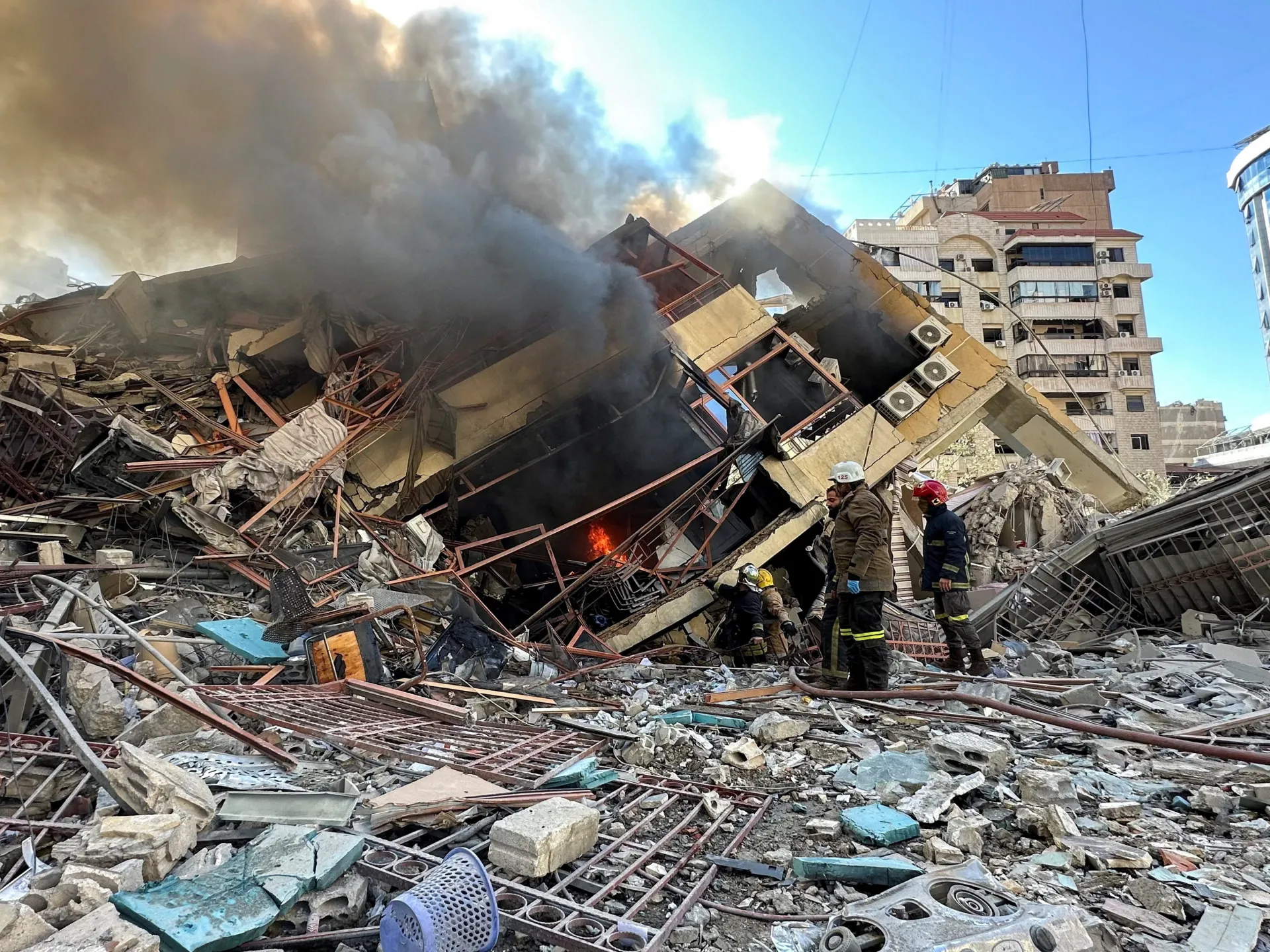
Pakistan and China are worried because some terrorist groups use Afghan soil to plan or carry out attacks in other countries. Pakistan says that groups such as the Tehreek-e-Taliban Pakistan (TTP) and other militants have carried out many attacks in Pakistan while hiding in Afghanistan.
These attacks have killed many Pakistani civilians and soldiers and have damaged the country’s economy and sense of security. Pakistan believes that if these groups are not stopped inside Afghanistan, they will continue to attack Pakistan in the future as well.
China is also concerned because it has major projects and workers in Pakistan, especially under the China-Pakistan Economic Corridor (CPEC) and the wider Belt and Road cooperation. If terrorist groups are not controlled, they can target these projects and Chinese citizens, which would hurt both Pakistan and China.
What Pakistan and China are asking Afghanistan to do
In the joint statement, Pakistan and China clearly said what they want from Afghanistan’s rulers regarding Pakistan China Afghanistan terrorism. Their main demands are:
- Afghanistan must dismantle and eliminate all terrorist groups that are operating from its land and threatening other countries.
- The Afghan authorities must take visible and verifiable steps, so that everyone can see that these groups are being stopped and removed.
- Afghan soil must not be used for planning, funding, training or launching attacks against any other country.
- The Afghan leadership must keep its promise that it will not allow its territory to be used against neighbours.
By using words like “visible and verifiable”, Pakistan and China are saying that they want more than just statements. They want actions that can be checked on the ground, such as arrests, shutting down training camps, blocking money channels and stopping cross-border movement of fighters.
Zero tolerance for terrorism
Pakistan and China also repeated that they have zero tolerance for terrorism in all forms and shapes. This means they do not accept any excuses for violent groups that attack civilians, soldiers or important projects.
China praised Pakistan for the “comprehensive measures” it has taken to fight terrorism and to protect Chinese personnel and projects in Pakistan. Pakistan has set up special security units and carried out many operations to target militant hideouts and networks across the country.
For Pakistan, highlighting Pakistan China Afghanistan terrorism in such a public way helps to show the world that the country is serious about its own fight and that it expects the same seriousness from others, especially from Kabul. For China, it is a way to support a close partner and to protect its long-term investment and security interests in the region.
Inclusive politics and peace inside Afghanistan
The joint statement is not only about security and terrorism; it also talks about the political future of Afghanistan. Pakistan and China said they want to work with the international community to encourage Kabul to follow a more balanced path.
They urged Afghanistan’s rulers to:
- Build an inclusive political system that gives space to all ethnic, religious and social groups in Afghanistan.
- Adopt moderate policies at home and abroad, instead of extreme or harsh policies.
- Focus on economic development, job creation and basic services for the Afghan people.
- Maintain friendly and respectful relations with neighbouring countries.
According to Pakistan and China, an inclusive and moderate Afghanistan will be more stable and more likely to attract investment, trade and development projects. But they also believe that this stability will be very hard to achieve if Pakistan China Afghanistan terrorism is not controlled and if militant groups continue to operate from Afghan soil.
Pakistan’s sacrifices and China’s support
Pakistan has often reminded the world that it has paid a very high price in the fight against terrorism. Thousands of Pakistanis, including many security personnel, have been killed or injured in attacks, and the country’s economy has faced heavy losses over many years.
In the latest joint statement, China openly recognised Pakistan’s sacrifices and its efforts to protect Chinese citizens and projects. This public praise is important for Pakistan because it shows that a major global power values its struggle and sees it as genuine.
By working together on Pakistan China Afghanistan terrorism, both countries are also sending a message that they stand side by side on security issues, not just on trade and investment. Their partnership now covers military cooperation, intelligence sharing and coordinated diplomacy, especially when it comes to the situation in Afghanistan.
Why this matters for CPEC and regional trade
CPEC is a key part of China’s wider Belt and Road vision and passes through important areas of Pakistan, including Balochistan and Khyber Pakhtunkhwa. These regions have seen various militant attacks over the years, and any rise in Pakistan China Afghanistan terrorism can directly affect work on roads, ports, energy plants and industrial zones.
The joint statement clearly said that both sides want the China-Pakistan Belt and Road cooperation to move forward in a safe and smooth way. For this, they see strong action against terrorist groups as essential. If security improves, there will be more confidence among investors, companies and workers.
In the long term, if Afghanistan becomes more stable and peaceful, Pakistan and China may also look at extending some trade and transit routes to or through Afghanistan. This could open new markets and give landlocked Afghanistan better access to ports and global trade, but only if Pakistan China Afghanistan terrorism is reduced in a clear and lasting way.
Role of the wider world
Pakistan and China also called on the international community to help in the fight against terrorist groups based in Afghanistan. They urged other countries to support fair and honest counter-terrorism efforts and to avoid double standards, where some groups are condemned and others are quietly supported.
They also pointed to the need for balance: while security concerns are real, the humanitarian and economic needs of ordinary Afghans should not be ignored. Many people in Afghanistan are facing poverty, lack of jobs and limited basic services, which can create conditions that extremist groups may try to exploit.
By linking Pakistan China Afghanistan terrorism with wider peace and development goals, Pakistan and China are saying that security and development must go together. Strong action against violent groups, along with support for ordinary people, is the only way to achieve lasting peace in the region.