National Rulebook for Artificial Intelligence: What Has the US Done?
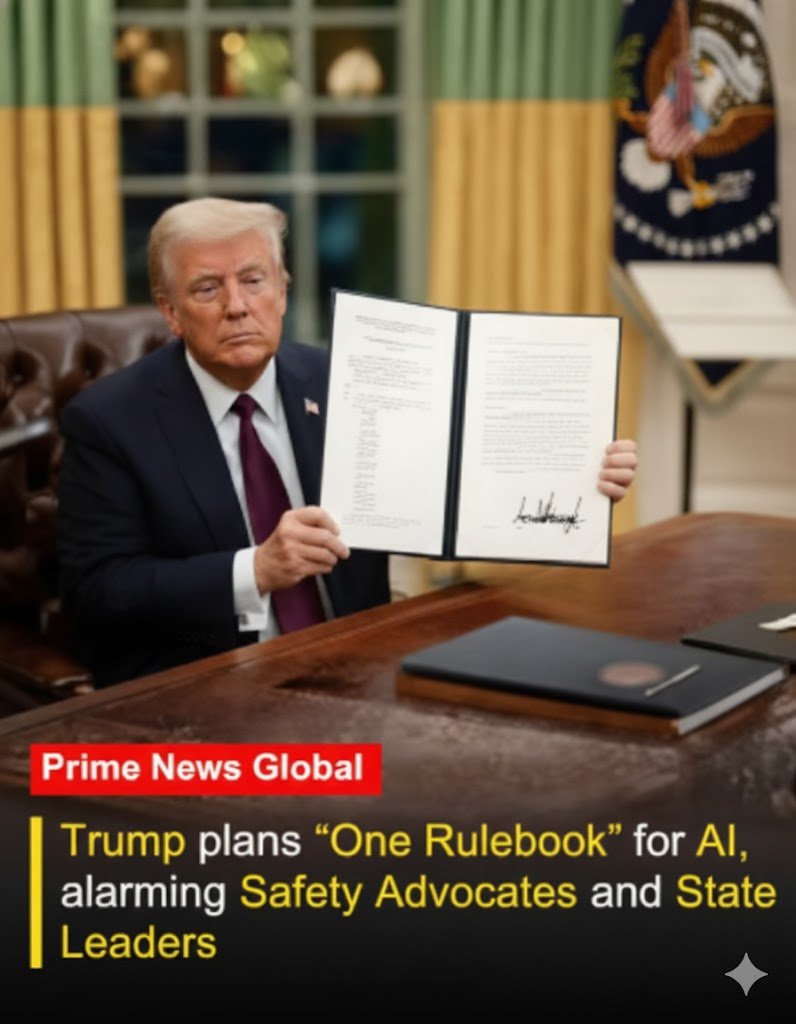
The United States has taken a major step toward a national rulebook for artificial intelligence. On 11 December 2025, President Donald Trump signed an Executive Order called “Ensuring a National Policy Framework for Artificial Intelligence.” The order aims to replace a patchwork of separate state AI rules with one federal approach that the White House says will be “minimally burdensome” for innovators.
According to the fact sheet, the goal of this national rulebook for artificial intelligence is to keep the US ahead in the global AI race while still protecting children, preventing censorship, respecting copyright and safeguarding communities from harm. Until a full national standard is written into law, the order tells federal agencies to push back against the “most onerous and excessive” state AI laws that the administration believes could stifle innovation.
Why the US Wants One National Rulebook for Artificial Intelligence
The administration argues that a growing patchwork of state AI laws is a threat to both business and national policy. Each state can design its own rules, which means AI companies may need to follow dozens of slightly different standards across the country. For startups and smaller firms, this can create high legal costs, complex compliance work and pressure to avoid certain markets altogether.
Beyond cost, federal officials say some state laws try to force AI models to change or filter their “truthful outputs” in ways that clash with federal competition and consumer‑protection rules. In their view, this kind of state‑level editing requirement can cross the line into censorship or deceptive practices. As a result, the White House sees a national rulebook for artificial intelligence as a way to restore clarity and keep AI services consistent across state borders.

What the Executive Order Changes in Practice
The order does not instantly create a full national rulebook for artificial intelligence, but it sets the machinery in motion. Several instructions stand out:
- The Attorney General must create an AI Litigation Task Force to identify and challenge state AI laws that conflict with the new national policy.
- Federal agencies are told to review state regulations and, where possible, preempt them or cut certain funding if states keep rules that Washington considers too restrictive.
- The Secretary of Commerce has 90 days to issue a policy notice that links eligibility for remaining Broadband Equity, Access and Deployment (BEAD) funds to whether states align with the federal AI framework.
- Senior advisers must prepare legislative recommendations that would turn this policy into a formal, uniform federal standard that clearly preempts conflicting state AI laws.
Together, these steps show how serious the administration is about building a single national rulebook for artificial intelligence that sits above state‑level experiments.

Support and Criticism of the National Rulebook for Artificial Intelligence
Big tech companies and many business groups have largely welcomed the push for a national rulebook for artificial intelligence, because it promises one set of rules instead of many. They say a clear federal framework can reduce uncertainty, speed up AI deployment and help the US stay competitive against regions like the EU and China that are also advancing their own AI regulations.
However, the order has also triggered strong criticism from several states, advocacy groups and legal scholars. Critics argue that the directive weakens state efforts to protect consumers, workers and vulnerable communities from risky AI systems. They also warn that, until Congress passes detailed legislation, the national rulebook for artificial intelligence may remain broad and leave important questions about safety, transparency and accountability unanswered.
Because of these tensions, many observers expect legal battles over how far the federal government can go in overriding state AI rules. The final shape of the national rulebook for artificial intelligence will likely be decided not just in Washington, but also in courts and in future negotiations between Congress, agencies and the states.