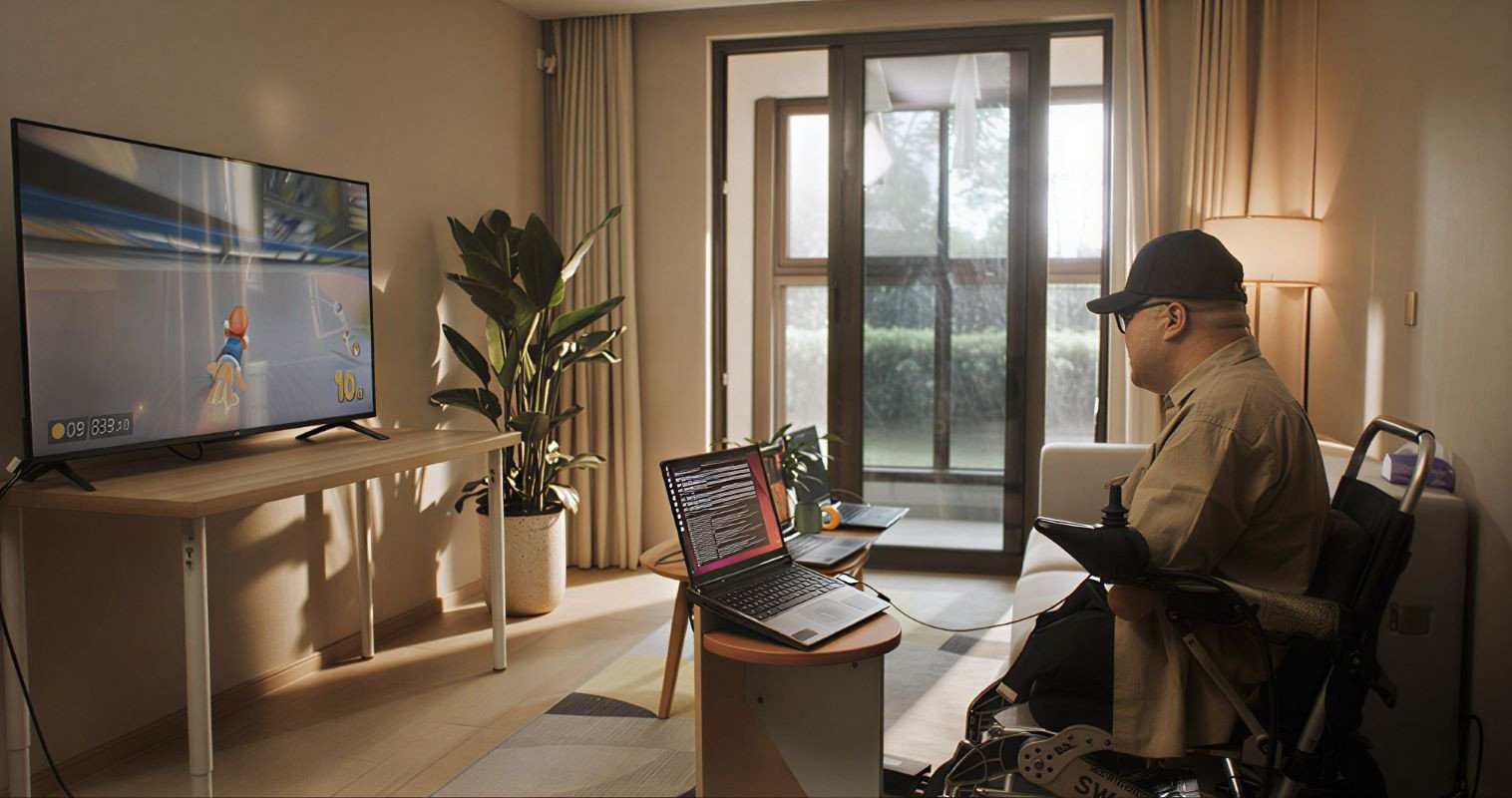
Mind‑Controlled Wheelchair: China’s Brain‑Computer Breakthrough Lets Tetraplegia Patient Command a Robot Dog
A Chinese clinical trial has demonstrated a mind‑controlled wheelchair that allows a tetraplegia patient to drive through his neighborhood using only his thoughts. In the same experiment, the patient also commanded a robotic dog to fetch a food delivery, showing how brain‑computer interfaces are moving from lab demos into real daily life.
From spinal‑cord injury to mind‑controlled wheelchair
The patient became quadriplegic in 2022 after a serious spinal‑cord injury and was left unable to move his arms or legs. Despite months of rehabilitation, he relied on others for nearly every task, from leaving his apartment to picking up packages.
In June 2025, researchers implanted him with an invasive brain‑computer interface developed by the Center for Excellence in Brain Science and Intelligence Technology under the Chinese Academy of Sciences. Within a few weeks, he could control a computer cursor and a tablet using his thoughts, paving the way for the mind‑controlled wheelchair trial.
What is a mind‑controlled wheelchair?
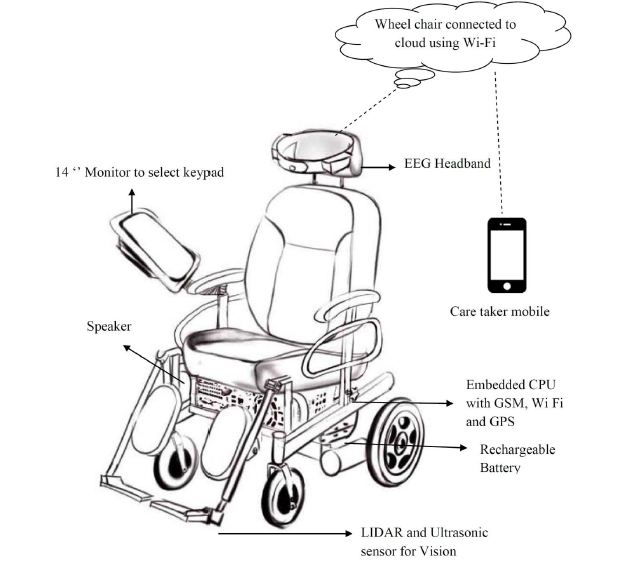
A mind‑controlled wheelchair uses a brain‑computer interface (BCI) to translate neural activity into commands for an electric wheelchair. Instead of pushing a joystick, the user imagines specific movements or directions, and the system decodes those patterns to move the chair forward, backward or around obstacles.
BCI systems like this create a direct communication link between the brain and external devices. Similar technologies have already enabled “mind typing” and robotic‑arm control in laboratories, but the challenge has been to make them robust and convenient for everyday use outside controlled settings.
How the brain‑computer interface works
In this trial, scientists used a high‑throughput wireless invasive BCI system that records electrical activity from the patient’s brain. The signals are transmitted wirelessly to an external processor, which uses advanced decoding algorithms to distinguish meaningful commands from background neural noise.
The research team combined two different decoding strategies to improve accuracy and responsiveness. As a result, they reported more than a 15 percent boost in overall brain‑control performance compared with earlier trials that only allowed screen‑based tasks.
Taking the mind‑controlled wheelchair into real‑world streets
After gaining reliable control over a cursor, the patient began using the mind‑controlled wheelchair to navigate real streets and corridors. He steered the chair around obstacles in his neighborhood and was able to move independently outdoors for the first time since his injury.
The same BCI system also connected to a robotic dog that could climb stairs, retrieve a food delivery and bring it back to the patient’s door. This expanded the technology from simple on‑screen interaction to full three‑dimensional interaction with the physical world, making the wheelchair and robot feel like extensions of his body.
Ultra‑low latency for natural control
For any mind‑controlled wheelchair to feel safe and natural, the time delay between thought and movement must be extremely short. In this project, the researchers reduced the end‑to‑end latency—from neural pickup to device action—to under 100 milliseconds.
This reaction time is faster than the body’s own reflexes, which helps the patient experience the wheelchair and robot dog as if they are directly linked to his intentions. The smoother the response, the easier it becomes to forget the technology and focus purely on where to go or what to do next.
What this means for rehabilitation and independence
The successful use of a mind‑controlled wheelchair in real‑world environments marks a major step forward for rehabilitation. Instead of depending entirely on caregivers, patients with tetraplegia could gain a new level of mobility, from going outside alone to handling simple household tasks with robotic helpers.
Beyond physical independence, researchers note important psychological benefits as well. Regaining the ability to move around and interact with the world can reduce feelings of isolation and give patients a renewed sense of dignity and control over their lives.
China’s long‑term vision for brain‑computer interfaces
This mind‑controlled wheelchair trial is part of China’s broader push to develop invasive BCI technology through multi‑center clinical studies. The research team, working with Huashan Hospital in Shanghai and industry partners, has already completed two successful invasive BCI cases and plans to expand their trials.
Scientists involved in the project believe brain‑computer interfaces could be used at scale to restore motor and language functions within the next few years. They also hope to apply similar technologies to treat neurological and psychiatric disorders, including Parkinson’s disease and depression, by precisely regulating brain activity.
Challenges and questions that remain
Despite the promising results, mind‑controlled systems still face important challenges before they can become widely available. Invasive surgery carries medical risks, long‑term device safety must be proven, and the cost of hardware and follow‑up care will need to come down for large‑scale use.
There are also ethical and privacy questions about collecting and transmitting detailed brain data from patients. Regulators and hospitals will have to define clear guidelines for consent, data security and fair access as mind‑controlled wheelchair technology moves closer to the market.
A glimpse of a mind‑driven future
For now, the image of a paralyzed man driving a mind‑controlled wheelchair down the street while his robotic dog fetches his takeout is a powerful symbol of what brain‑computer interfaces can achieve. It shows that mind‑driven devices are no longer just science fiction, but emerging tools that can restore mobility and hope to people living with severe paralysis.
As more trials build on this breakthrough, mind‑controlled wheelchairs and other BCI‑powered devices may soon become part of everyday rehabilitation, giving patients a chance to reclaim independence and reshape their futures.