What is Sanctioned Oil?
Sanctioned Oil is crude or refined oil that comes from countries whose energy sectors are under international restrictions, including Venezuela, Iran, and Russia. These sanctions are meant to cut off vital revenue and push governments to change their behavior, whether that means ending a war, stopping nuclear work, or improving human rights.
In theory, Sanctioned Oil should not move easily through normal channels, because banks, insurers, and major shipping companies are supposed to avoid it. In practice, however, large volumes of this oil still reach global markets through back‑door routes that are designed to hide where the oil comes from and who is really selling it.
How Sanctioned Oil moves through the shadow fleet
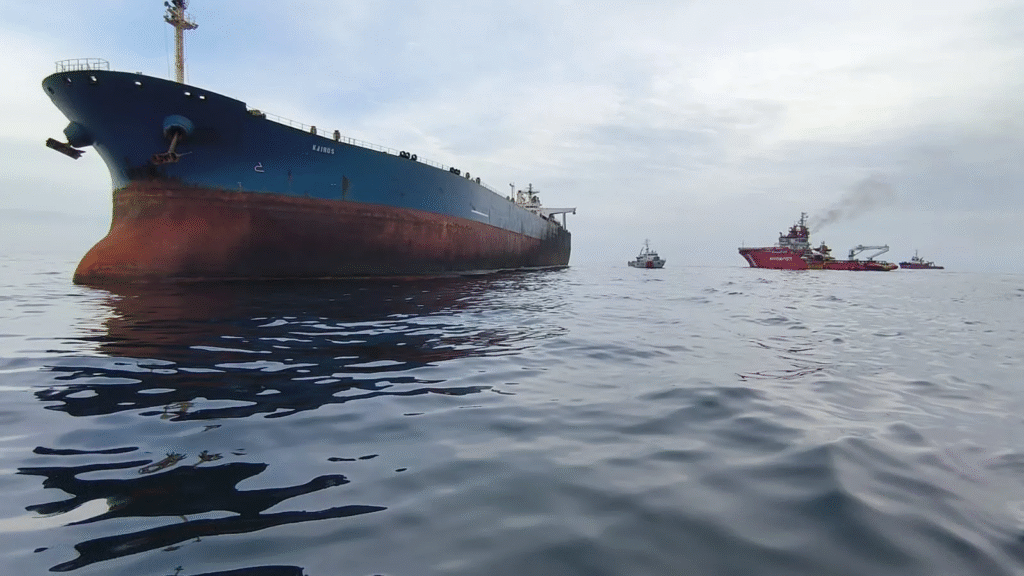
To keep Sanctioned Oil moving, exporters and middlemen rely on what is known as the shadow fleet or dark fleet, a loose network of mostly older tankers that operate with minimal transparency. Many of these ships are decades old, sail under flags of convenience, and are registered to shell companies that can be shut down or renamed quickly if regulators start asking questions.
Shadow fleet tankers often turn off their tracking devices or broadcast fake locations, a tactic called AIS spoofing. For example, a ship may appear on navigation systems near one country while satellite images show it quietly loading Sanctioned Oil at a restricted terminal in Venezuela or Iran. After loading, these ships may transfer oil to other tankers at sea, mix it with crude from non‑sanctioned sources, and then deliver it to buyers under a different label.
The Skipper tanker: a case that exposed the system
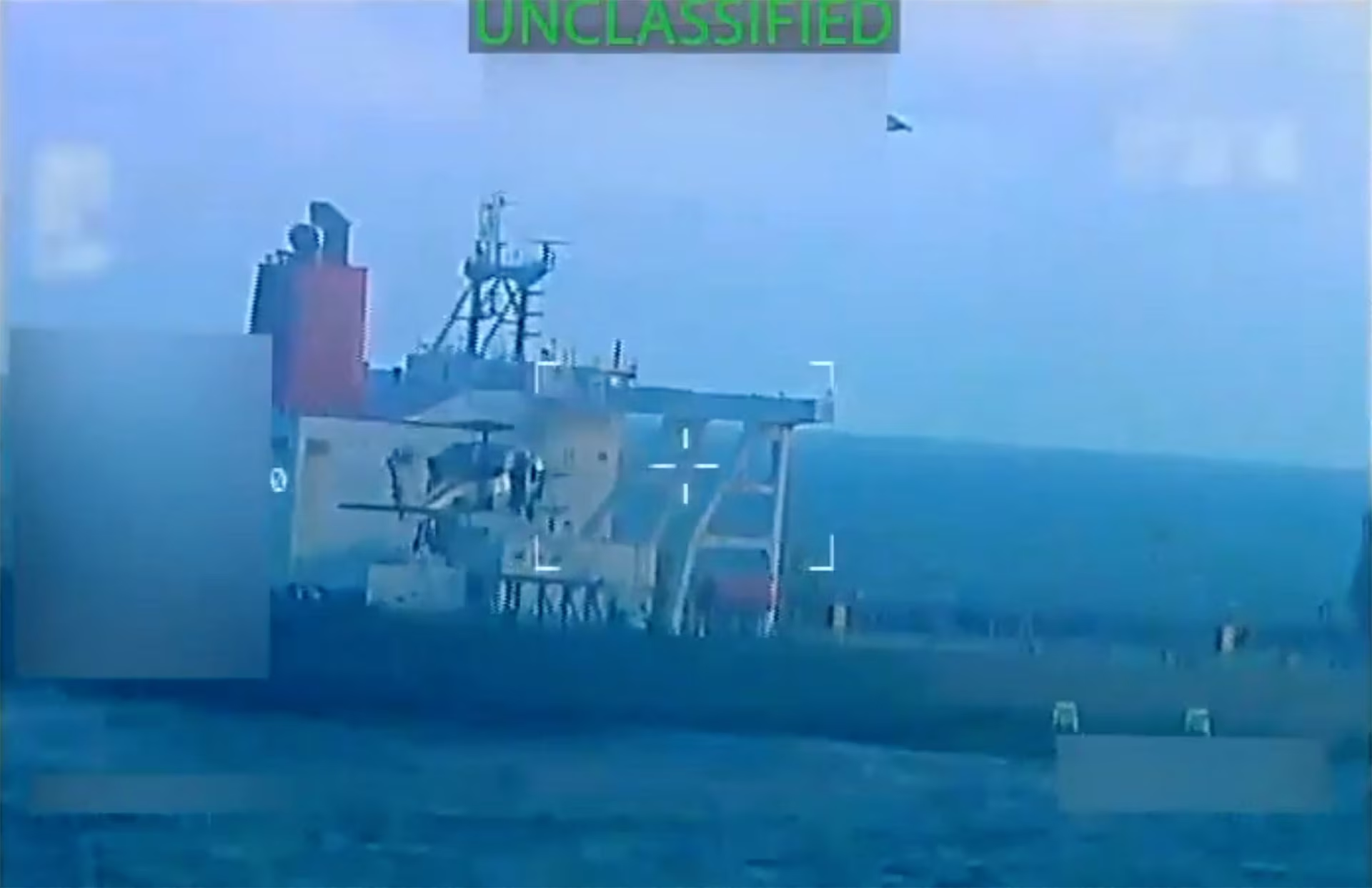
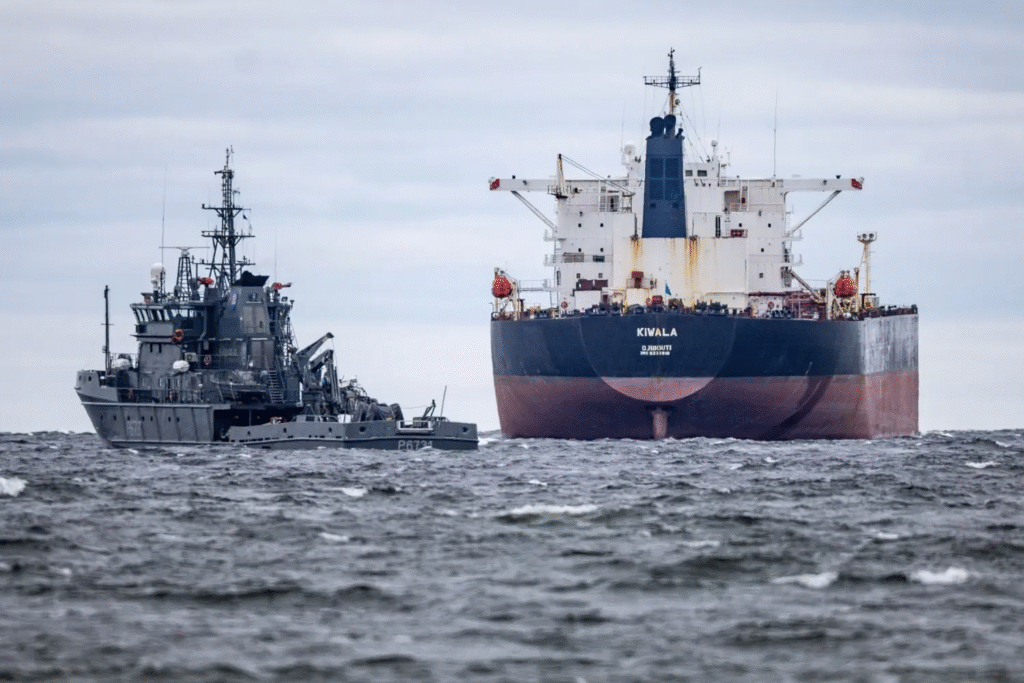
The seizure of the tanker Skipper near Venezuela made Sanctioned Oil front‑page news. Skipper had a history of carrying crude for Iranian networks linked to the Revolutionary Guards, and it was already on the U.S. sanctions list before its latest voyage.
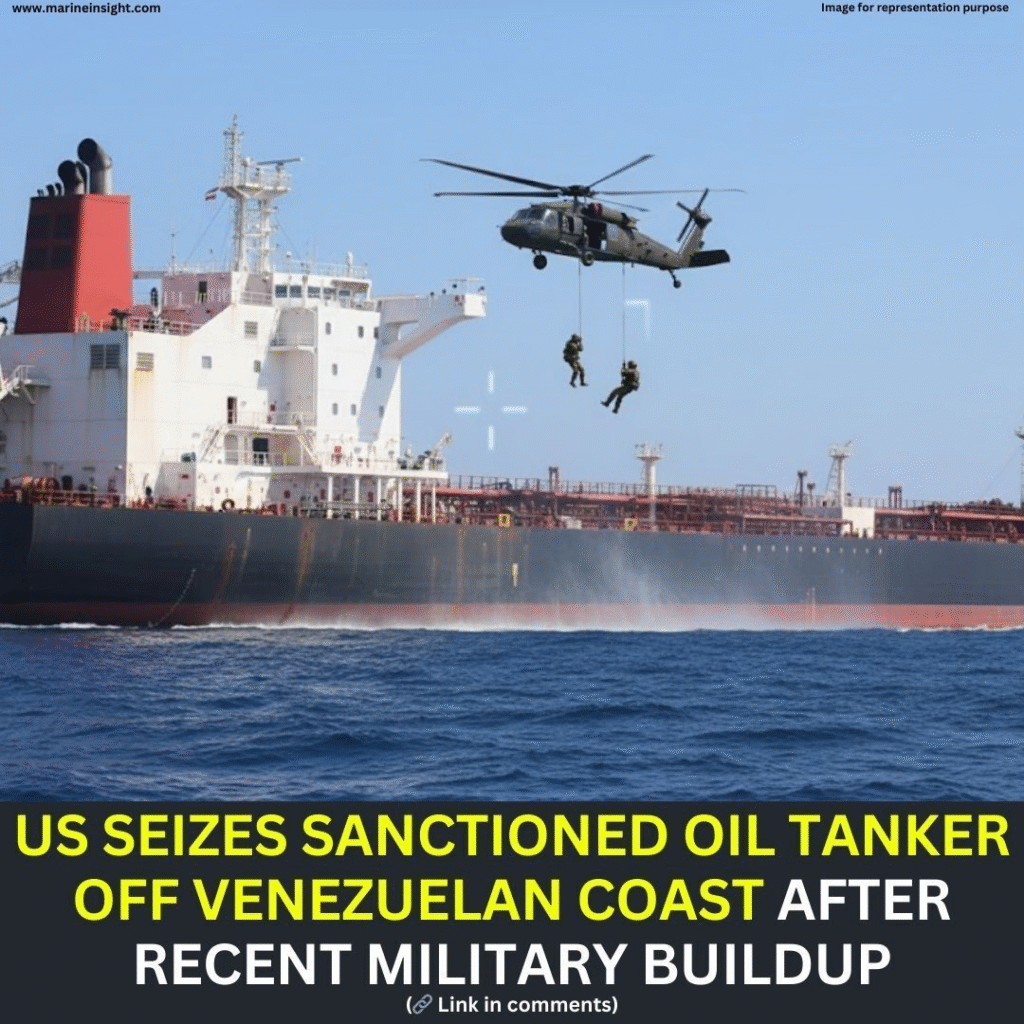
Investigators say the ship used spoofed signals to show that it was idling off Guyana while it actually loaded Sanctioned Oil at Venezuela’s Jose terminal. When U.S. forces intercepted and took control of Skipper in December, they were not only targeting one cargo; they were sending a message to the entire shadow fleet that its activities were being tracked and could now be physically stopped.
Why the U.S. is cracking down on Sanctioned Oil
For Washington, Sanctioned Oil is a pressure point that can be squeezed without direct military confrontation. Venezuela uses oil revenue to keep the Maduro government afloat, Iran relies on crude exports to finance its regional networks, and Russia uses energy money to fund its war and domestic spending. Reducing the flow of Sanctioned Oil is therefore seen as a way to weaken these regimes over time.
The seizure of Skipper fits into a broader U.S. strategy of making it more expensive and risky to move Sanctioned Oil. By showing that ships can be seized, cargo can be lost, and legal cases can follow, the United States hopes to scare off some shipowners, traders, and insurers who might otherwise see sanctioned cargoes as an easy profit opportunity.
What it means for Venezuela, Iran, and Russia
For Venezuela, the stakes around Sanctioned Oil are extremely high. Its economy has shrunk sharply over the past decade, and oil exports remain the main source of hard currency for the Maduro government. Dozens of tankers waiting to load Venezuelan crude either face sanctions or use tactics similar to the shadow fleet, making them vulnerable if the United States chooses to target more ships.
Iran and Russia are also major users of the shadow fleet for their Sanctioned Oil exports. Analysts point out that if seizures and stricter enforcement spread, these countries may have to pay higher shipping rates, offer deeper discounts to buyers, or store more oil on ships at sea while waiting for safe routes. All of that cuts into the revenue that sanctions are intended to restrict in the first place.
Will a hard line on Sanctioned Oil push up global prices?
Many people worry that a crackdown on Sanctioned Oil will automatically mean higher prices at the pump, but the picture is more complex. Venezuela, for example, exports less than one million barrels per day into a market that consumes more than 100 million barrels per day, so pressure on its Sanctioned Oil alone is unlikely to cause a major price spike.
A broader campaign that seriously limits Russian or Iranian Sanctioned Oil flows could have a bigger impact, especially if other producers are already close to capacity. For that reason, Western governments are trying to balance stricter enforcement with flexibility, using tools like price caps, selective seizures, and targeted sanctions rather than a complete shutdown all at once.
How technology is changing the game
The fight over Sanctioned Oil is increasingly driven by data and technology. Maritime intelligence firms now monitor global shipping in near real time, using AIS signals, satellite images, and pattern analysis to flag suspicious behavior such as long “dark” periods, unusual detours, and ship‑to‑ship transfers in remote waters.
The Skipper case showed that even when a ship broadcasts fake coordinates, high‑resolution satellite imagery and careful tracking can reveal where it really is and what it is doing. As enforcement agencies and private analysts become better at this kind of monitoring, the operators of Sanctioned Oil routes must accept higher levels of risk and scrutiny if they choose to stay in business.
Geopolitical stakes: more than just oil
Sanctioned Oil is now at the center of a larger struggle over how far sanctions can go and who controls the rules of global trade. If tanker seizures and aggressive enforcement become normal tools, countries that buy or move Sanctioned Oil—especially China and India—will need to decide how much friction with the United States and Europe they are willing to tolerate.
China, which imports significant volumes of discounted Sanctioned Oil from Russia, Iran, and Venezuela, is trying to reduce its vulnerability by diversifying suppliers and building large strategic reserves. At the same time, it will be watching closely to see whether the U.S. is willing to seize more ships and whether other countries copy this strategy in key chokepoints like the Danish straits or major global canals.
How Sanctioned Oil is reshaping shipping and risk
For the shipping industry, Sanctioned Oil has introduced a new class of high‑risk, high‑reward voyages. Some older tankers that might otherwise be scrapped are finding a second life in the shadow fleet, earning high fees for risky trips but facing the constant threat of breakdowns, accidents, and enforcement actions.
Insurers, banks, and classification societies are under pressure to tighten their standards and avoid links to Sanctioned Oil, which pushes more of the business into smaller or less transparent players. Over time, this fragmentation can increase the chance of spills, safety problems, and financial scandals, which is another reason why regulators argue that a tougher line on Sanctioned Oil is needed