Imran Khan vs Asim Munir: Inside Pakistan’s Explosive Power Struggle in 2025
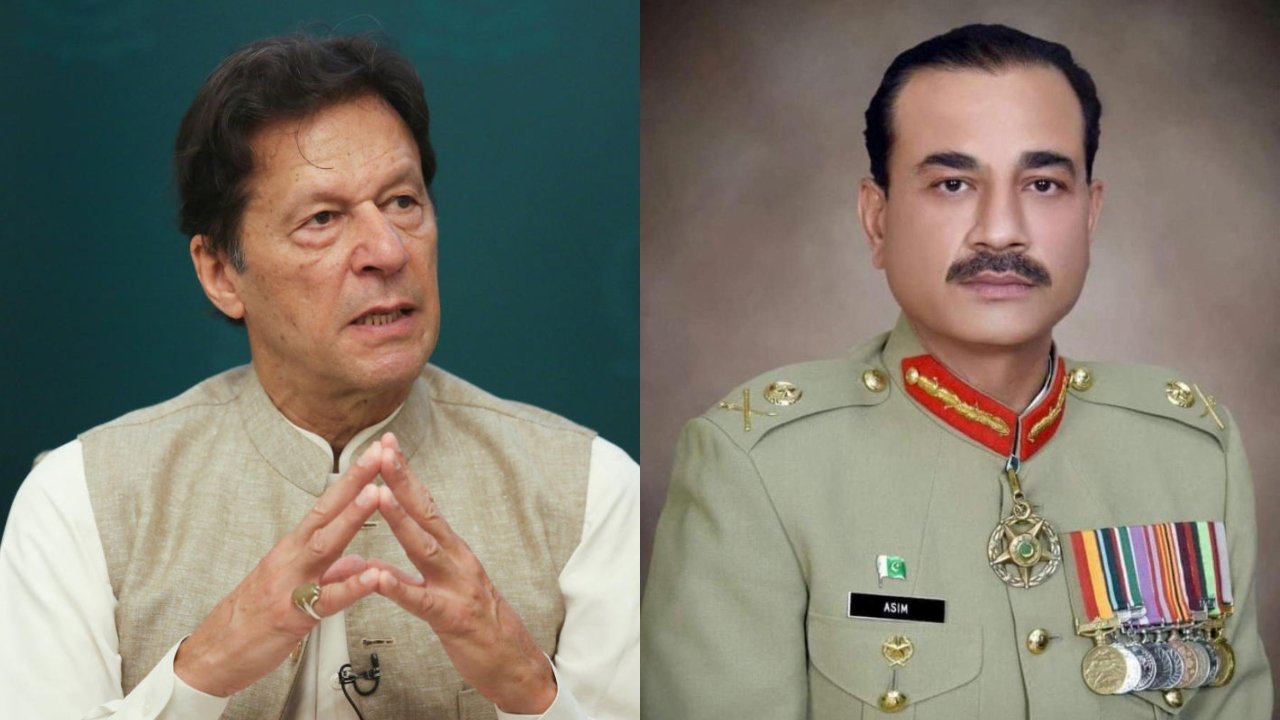
Imran Khan vs Asim Munir has become the central power struggle in Pakistan, mixing death rumours, family fears and a brutal clash between an ex-prime minister and the current army chief. As questions grow over Imran Khan’s health and safety in jail, many Pakistanis believe this rivalry now decides the future of the country’s politics and institutions.
Death rumours and blackout around Imran Khan
In recent weeks, rumours have spread that Imran Khan may have been harmed or even killed in custody, despite official claims that he is “fit and healthy” inside Adiala Jail. His sisters Noreen Niazi and Aleema Khanum say they have been blocked from meeting him and openly demand proof that he is alive and safe.
Imran’s son Kasim has also posted on social media, accusing the authorities of creating an “absolute blackout” to hide his father’s real condition. For his family and supporters, the lack of direct contact and visual proof has turned Imran Khan vs Asim Munir into a life‑and‑death confrontation, not just a political dispute.
How Imran Khan vs Asim Munir began
The conflict between Imran Khan and Asim Munir started years before today’s crisis. In 2018, General Qamar Javed Bajwa appointed Asim Munir as director general of the powerful Inter‑Services Intelligence (ISI), giving him one of the most sensitive posts in Pakistan.
By 2019, when Imran was prime minister, he abruptly removed Munir from the ISI job, a decision widely seen as the first big step in the Imran Khan vs Asim Munir feud. Later reports claimed Munir had shown Imran alleged evidence of corruption involving his wife Bushra Bibi, a claim Imran strongly rejects, saying he neither saw such proof nor sacked Munir for that reason.
Corruption allegations and leaked audio
The corruption angle kept the Imran Khan vs Asim Munir rivalry alive even after Munir’s transfer. In 2022 an alleged audio clip surfaced, in which former PTI leader Aleem Khan claimed Imran removed Munir because he exposed corruption linked to Bushra Bibi.
Imran publicly denied this story and accused sections of the media and establishment of trying to damage his reputation using false narratives. However, such leaks deepened mistrust between Khan and the military leadership, turning a personal clash into an institutional struggle.
From army support to open confrontation
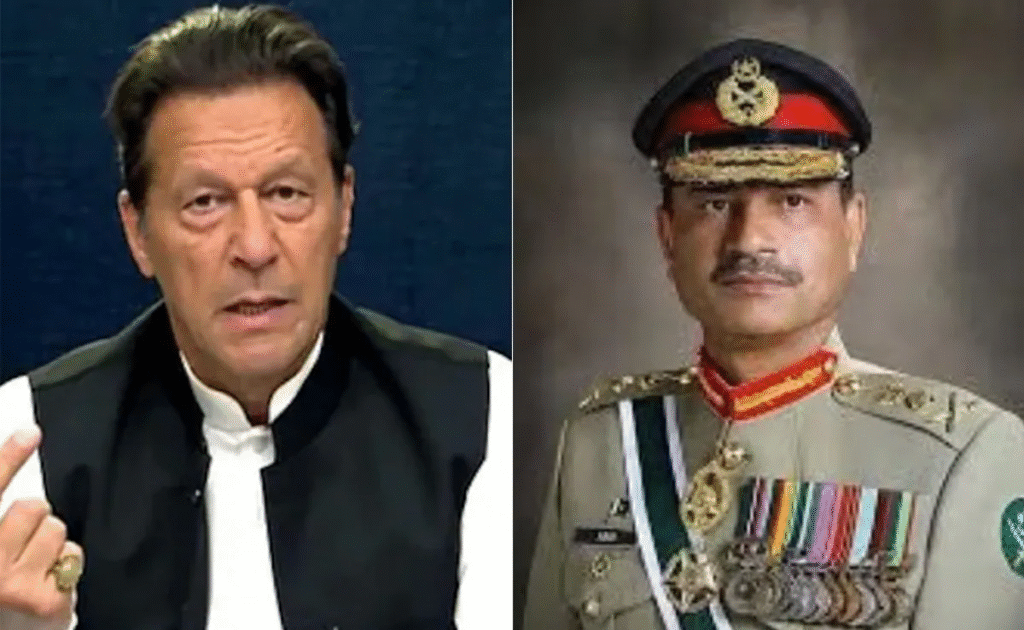
Imran Khan initially came to power with clear support from Pakistan’s military establishment, which saw him as a useful political partner. Over time, disagreements grew over governance, handling of the Covid‑19 pandemic and corruption controversies, gradually eroding this partnership.
By 2022, when Imran was removed from office, many analysts believed the army had played a decisive role in engineering his ouster. Around seven months later, Asim Munir became army chief, and the Imran Khan vs Asim Munir power struggle moved into a much more intense and personal phase.
Assassination attempt and blame on ISI
The feud escalated further after an assassination attempt on Imran Khan in November 2022. In May 2023, Imran openly accused senior ISI officer Major‑General Faisal Naseer of being behind the attack, calling him responsible for the plot against his life.
Since Naseer was seen as close to Asim Munir, many observers interpreted this accusation as a direct attack on the army chief himself. From that point, Imran Khan vs Asim Munir turned into an open “war of narratives”, with Imran challenging the army’s role and the army moving to crush his political movement.
Arrests, protests and Imran’s direct attacks on Munir
Soon after, Imran Khan was arrested on corruption charges, triggering huge protests and clashes between PTI supporters and security forces across Pakistan. During interviews and statements, Imran repeatedly said the army chief was “petrified” that he would win elections and remove him, accusing Munir of dismantling Pakistan’s future to protect himself.
Even from behind bars, Imran has used messages and social media posts to keep the Imran Khan vs Asim Munir conflict in the public eye. PTI rallies have continued to demand his release and “haqeeqi azadi”, openly blaming the army leadership, especially Munir, for repression and political engineering.
Imran’s harshest words: “most oppressive dictator”
In late 2025, the language in Imran Khan vs Asim Munir became even more extreme. From his official social media account, Imran described Asim Munir as the “most oppressive dictator in Pakistan’s history” and a “mentally unstable” man whose rule has brought unprecedented cruelty.
He claimed Munir is inflicting “every possible form of injustice” on him and his wife, saying no political leader’s family has ever faced such treatment. Imran also declared that he would neither bow down nor submit to Munir, no matter what pressures are used against him.
Afghanistan policy and regional tensions
Imran Khan vs Asim Munir is not limited to domestic politics; it also touches regional issues like Afghanistan. Imran has sharply criticised the army chief’s Afghanistan policy, accusing him of destroying the relative peace that existed during PTI’s tenure.
According to Imran, Munir is trying to please global and regional lobbies that oppose the current Taliban government, instead of building a strong relationship with Kabul. In Imran’s view, this “short‑sightedness” is damaging Pakistan’s strategic position and stability in the wider region.
“Asim Law”, immunity and weakening of institutions
Many analysts argue that Imran Khan vs Asim Munir must be understood alongside major constitutional changes in Pakistan. In 2025, parliament passed the 27th constitutional amendment, which granted lifetime legal immunity to Asim Munir and other service chiefs, as well as to President Asif Ali Zardari.
This amendment also reduced the powers of the Supreme Court, stripping away parts of its constitutional jurisdiction and weakening what remained of judicial independence. Imran called the new setup “Asim Law”, saying there is no rule of the Constitution, only the rule of the army chief.
Imran Khan’s disappearance and rising fears
In the weeks after that post, Imran Khan disappeared from public view, with no new messages and no confirmed meetings with his family for over 20 days. This silence has fueled fresh waves of rumours that the Imran Khan vs Asim Munir struggle may have taken a darker turn.
While the government and military remain mostly silent, jail officials insist that Imran is “in good health”, offering few details. For many Pakistanis, the lack of transparency makes the situation even more worrying and raises fears about how far this power struggle might go.
What Imran Khan vs Asim Munir means for Pakistan’s future
The Imran Khan vs Asim Munir conflict is not just a personal rivalry; it reflects the deeper question of who really rules Pakistan—elected leaders or the military establishment. Imran’s supporters see him as resisting a “deep state” that wants to eliminate independent civilian politics, while critics accuse him of attacking institutions whenever they stop backing him.
Asim Munir, on the other hand, now holds unmatched formal and informal power, protected by constitutional immunity and backed by the security apparatus. Whether this centralisation brings stability or triggers more unrest will shape Pakistan’s politics, justice system and regional role for years to come.