Gul Plaza Fire Karachi: Deadly Blaze Exposes Major Safety Failures
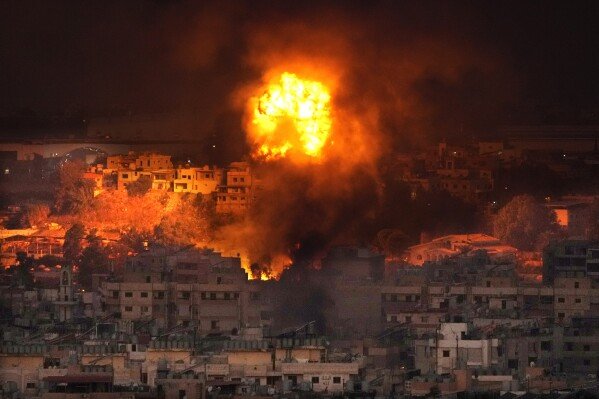
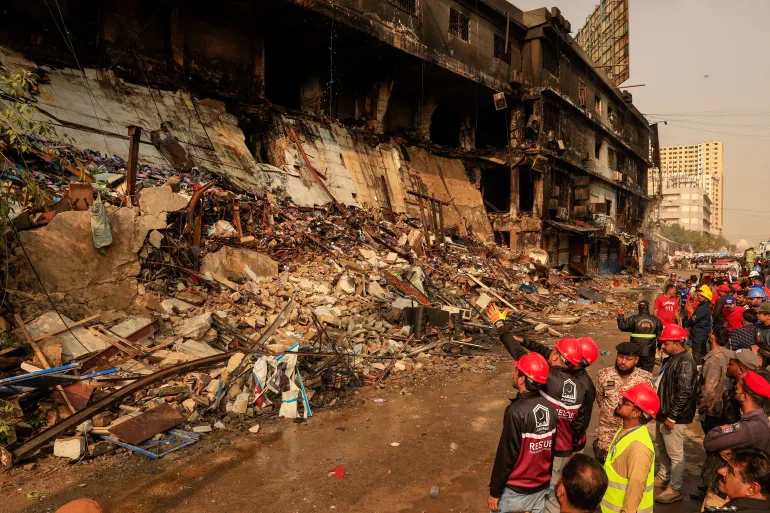
Gul Plaza fire Karachi has become one of the deadliest fires the city has seen in years. At least 23 people, including a firefighter, lost their lives when a huge blaze tore through the busy shopping centre on MA Jinnah Road.
The fire burned for more than 24 hours and turned Gul Plaza into a symbol of Karachi’s deeper safety, rescue, and governance problems.
What Happened in the Gul Plaza Fire Karachi?
Gul Plaza is a three‑storey commercial building in Karachi’s historic Saddar area, with more than 1,200 shops selling jewellery, carpets, crockery, bags, and other goods.
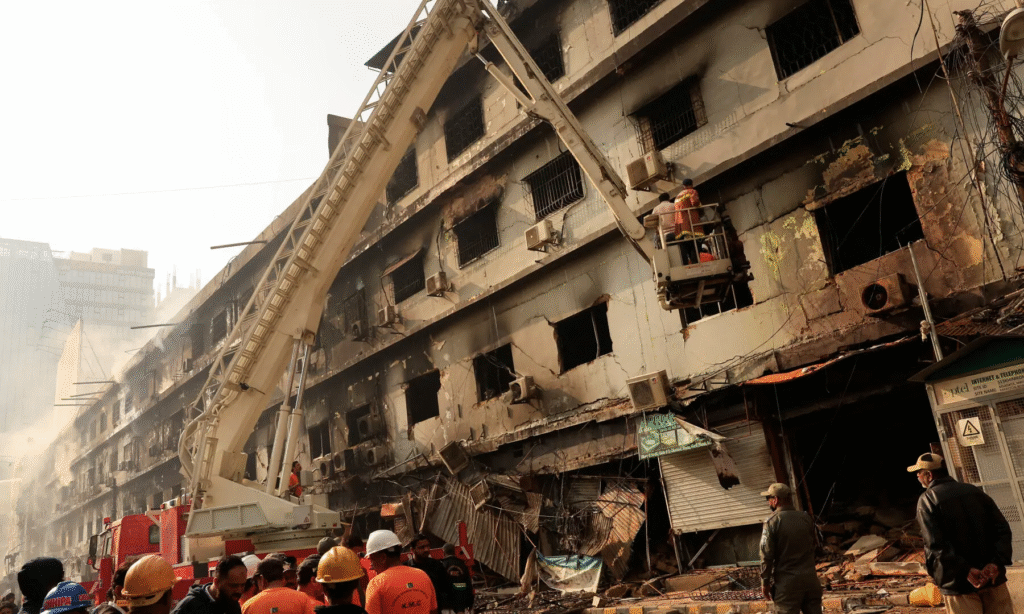
On Saturday night, during peak wedding season, the building was full of shoppers when the Gul Plaza fire Karachi started and quickly spread through the mall.
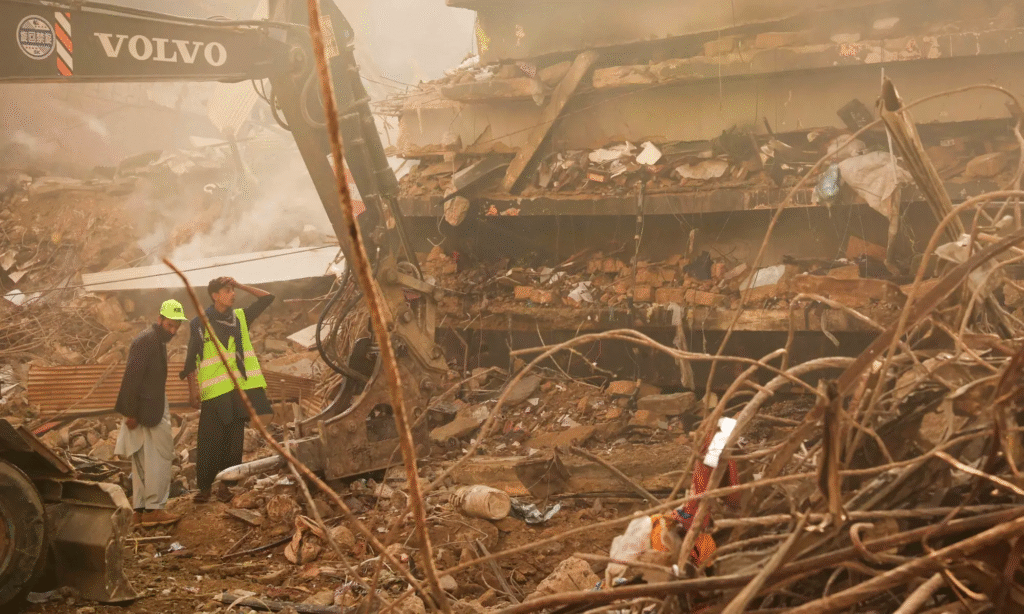
Officials say parts of the structure collapsed, and poor ventilation made it even harder for rescue teams to move inside.
The fire was finally brought under control after more than a day, but many people were already dead or missing by then.
Possible Cause of the Gul Plaza Fire Karachi
So far, the exact cause of the Gul Plaza fire Karachi has not been confirmed. Police officials have said the blaze may have started due to a short circuit or a failed circuit breaker.
However, investigators and urban experts stress that a proper inquiry is needed before any final conclusion is made.
Urban researcher Namra Khalid explained that the key question is not only how the fire started, but how it was able to grow so fast and become so deadly.
Fires can start anywhere, but the scale of the Gul Plaza fire Karachi points to deeper structural and systemic failures inside the building and across the city.
Why Did Rescue Efforts Take So Long?
Rescue officials said the operation at Gul Plaza was extremely difficult because of the size of the building and the level of damage.
Much of the structure had collapsed, and what was left was so weak that teams had to move slowly to avoid further injuries or deaths.
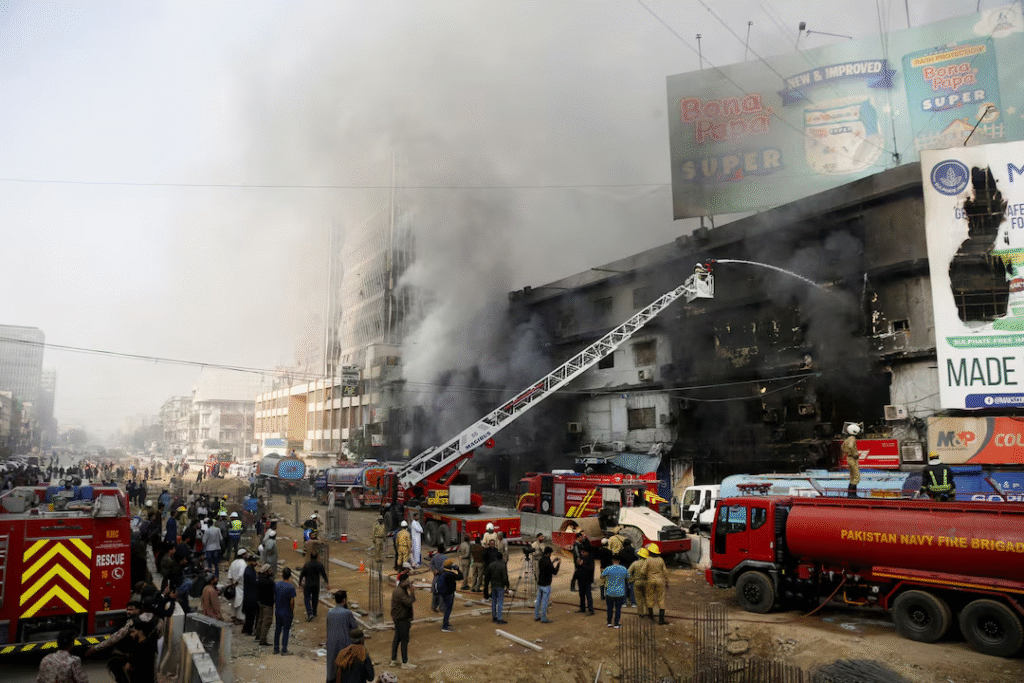
According to Rescue 1122 spokesperson Hassan ul‑Haseeb, access to the site was another major problem.
- The road outside Gul Plaza is narrow.
- A large crowd gathered to watch, blocking the way for fire trucks and water tankers.
Inside the building, huge amounts of plastic and other flammable materials caused the fire to flare up again and again, even during cooling operations.
People on the ground floor managed to escape using multiple exits, but many on the upper floors could not find a safe way out and died in the smoke and flames.
Gul Plaza Fire Karachi and Karachi’s History of Deadly Fires
The Gul Plaza fire Karachi is being called the city’s worst blaze since the 2012 Baldia factory fire, which killed more than 250 workers at a garments factory.
That earlier inferno was later ruled as arson, and a court sentenced two men to death for deliberately setting the factory on fire.
In recent years, Karachi has continued to see frequent fires in warehouses, malls, and residential buildings.
- City planners estimate that about 70 percent of buildings lack proper fire safety systems.
- In both 2023 and 2024, Karachi recorded more than 2,500 fire incidents each year.
These repeated events show that the Gul Plaza fire Karachi is not an isolated tragedy but part of a wider pattern of neglect and weak enforcement.
What the Gul Plaza Fire Karachi Reveals About Safety and Governance
Urban planners like Muhammad Toheed say the Gul Plaza fire Karachi highlights long‑standing failures in building safety, inspections, and emergency planning.
He argues that the government has no excuse, because fire brigades and rescue systems are its direct responsibility.
Toheed points out that key safety measures are often missing or only exist on paper:
- Building codes are not properly enforced.
- Routine inspections are rare.
- Fire extinguishers and safety drills are often missing or poorly managed.
Khalid adds that Karachi is weighed down by “informal fixes and chronic failures,” where safety is treated as optional and real accountability is missing.
In this environment, a disaster like the Gul Plaza fire Karachi becomes almost inevitable.
Karachi’s Weak Firefighting Capacity
For a city of more than 20 million people, Karachi has only 35 fire stations and around 57 fire trucks, plus six ladder trucks, according to officials.
This limited capacity makes it very hard to deal with large fires in big commercial buildings like Gul Plaza.
Toheed says that Gul Plaza was actually better designed than many other buildings in Karachi, with fire extinguishers, multiple exits, and reasonably wide stairs.
Yet, even in this “better” building, many lives were lost in the Gul Plaza fire Karachi, which shows how dangerous conditions are in less prepared places across the city.
He warns that if Gul Plaza is the benchmark, then much of Karachi is a ticking time bomb waiting for the next big fire.
Will the Gul Plaza Fire Karachi Lead to Real Change?
Experts say that after every major tragedy, there is public anger and promises of reform, but over time the news fades and little actually changes.
Khalid hopes that the Gul Plaza fire Karachi will be different, and that citizens will keep pushing the administration to act.
Real change would mean:
- Strong enforcement of building codes.
- Strict checks on fire exits, alarms, and extinguishers.
- Better training and equipment for firefighters and rescue teams.
- Clear penalties for building owners and officials who ignore safety rules.
If these steps are not taken, Karachi may face another Gul Plaza‑type disaster in the future, with more lives lost and families destroyed.