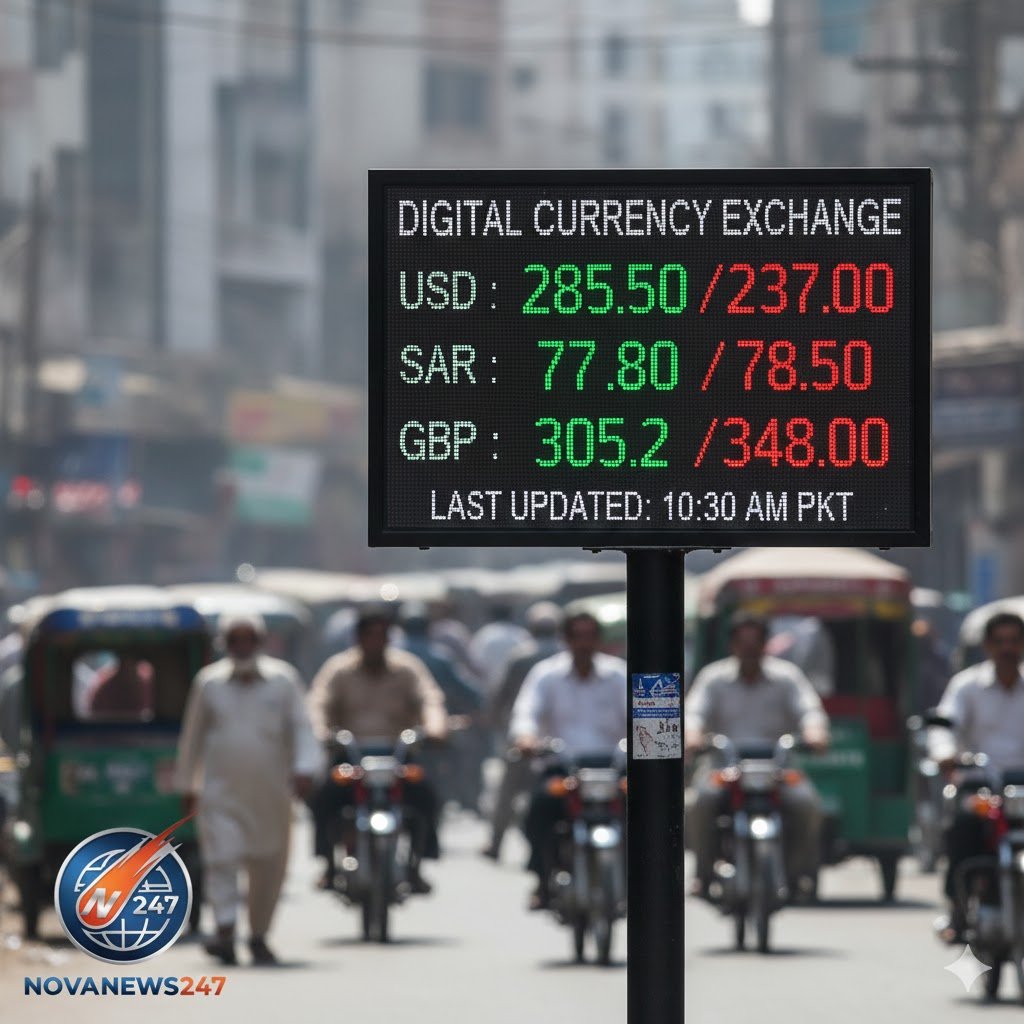
Open market rates of foreign currencies in Pakistan today
The open market rates of foreign currencies in Pakistan give a real-time view of how much people are paying to buy or sell popular currencies in cash deals. On Friday, December 02, 2026, the Forex Association of Pakistan issued updated open market rates for major currencies in Karachi, which are widely followed by traders, travellers, and overseas Pakistanis.
These rates are different from interbank rates, because they reflect demand and supply in the kerb market where exchange companies and money changers operate. For anyone planning travel, remittances, or small imports, knowing these rates helps in getting a better deal and choosing the right time to exchange money.
Today’s key currency buying and selling rates
According to data supplied by the Forex Association of Pakistan, the US dollar remained the main benchmark for the open market. The buying rate for USD stood at 280.54 rupees, while the selling rate was 281.15 rupees, showing a narrow spread between what dealers pay and what they charge.
The interbank rate for the US dollar was slightly lower, with buying at 280.15 and selling at 280.25, highlighting the usual gap between official banking channels and open market transactions. This difference often attracts people towards exchange companies when they want faster cash conversion, even if the interbank rate looks a bit more stable on screens and news tickers.
For regional currencies linked with travel and remittances, the UAE dirham (AED) and Saudi riyal (SAR) also showed active trading. The AED was quoted at 76.51 for buying and 77.27 for selling, while the SAR stood at 74.80 and 75.42 respectively, reflecting strong demand from Pakistanis working in Gulf countries and people performing Umrah or planning Hajj.
European and British currencies also remained important for students, tourists, and importers. The euro traded at 328.69 for buying and 331.62 for selling, whereas the British pound (GBP) was much higher, with buying at 377.21 and selling at 380.66, underlining the stronger value of these currencies against the Pakistani rupee.
Even the Japanese yen, which is often traded in smaller units, was included in the daily list. Its buying rate stood at 1.77 and selling at 1.84, reminding readers that minor movements in yen can matter for businesses dealing in Asian imports like machinery, electronics, and auto parts.
Why open market rates matter for you
Open market rates of foreign currencies Pakistan are important for many groups, including travellers, students, expatriates, and small businesses. Someone going for a short trip to Dubai, Saudi Arabia, Europe, or the UK will look at AED, SAR, euro, and pound rates before visiting an exchange company, because even a small change in the rate can increase or reduce total travel cost.
Overseas Pakistanis who send remittances also track these levels to see how much their families receive in rupees when converting foreign currency into local cash. When the rupee weakens, the same amount in dollars or dirhams converts into more rupees, but when the rupee strengthens, the local value of remittances can fall slightly.
Small and medium businesses that pay suppliers in foreign currencies watch open market and interbank trends side by side. They often compare the spread between official rates and kerb market rates to decide whether to use banking channels, exchange companies, or a mix of both for their payments.
Difference between open market and interbank rates
The interbank rate is the official exchange rate at which banks trade currencies with each other and with the central bank. It is usually smoother and reflects monetary policy, foreign exchange reserves, and formal capital flows.
In contrast, open market rates of foreign currencies Pakistan are driven by cash demand from the public, travellers, and small traders. High demand for dollars or Gulf currencies in the kerb market can push their open market rates slightly above interbank levels, as seen with the dollar trading at 280.54/281.15 in the open market versus 280.15/280.25 in the interbank.
This difference is called the premium or discount, and it often narrows when authorities take steps to control speculation and improve supply of foreign currency. When the gap becomes too wide, it can also attract regulatory attention, because a large spread may suggest pressure on the rupee or increased informal flows.
Tips for reading daily currency updates
Open market rates of foreign currencies Pakistan are usually presented in a simple table with columns for buying and selling prices. The buying column shows how much an exchange company will pay when it purchases foreign currency from the public, while the selling column shows how much it will charge when selling the same currency.
A narrow difference between buying and selling usually points to good liquidity and active trading in that currency. Wider spreads may signal low demand, higher risk, or sudden volatility in global markets, so readers should always look at both columns instead of focusing on only one number.
When checking any news, it is useful to compare today’s rates with previous days or weeks. Many financial portals and central bank bulletins provide charts or historical tables that show how the rupee has moved against the dollar and other currencies over time.