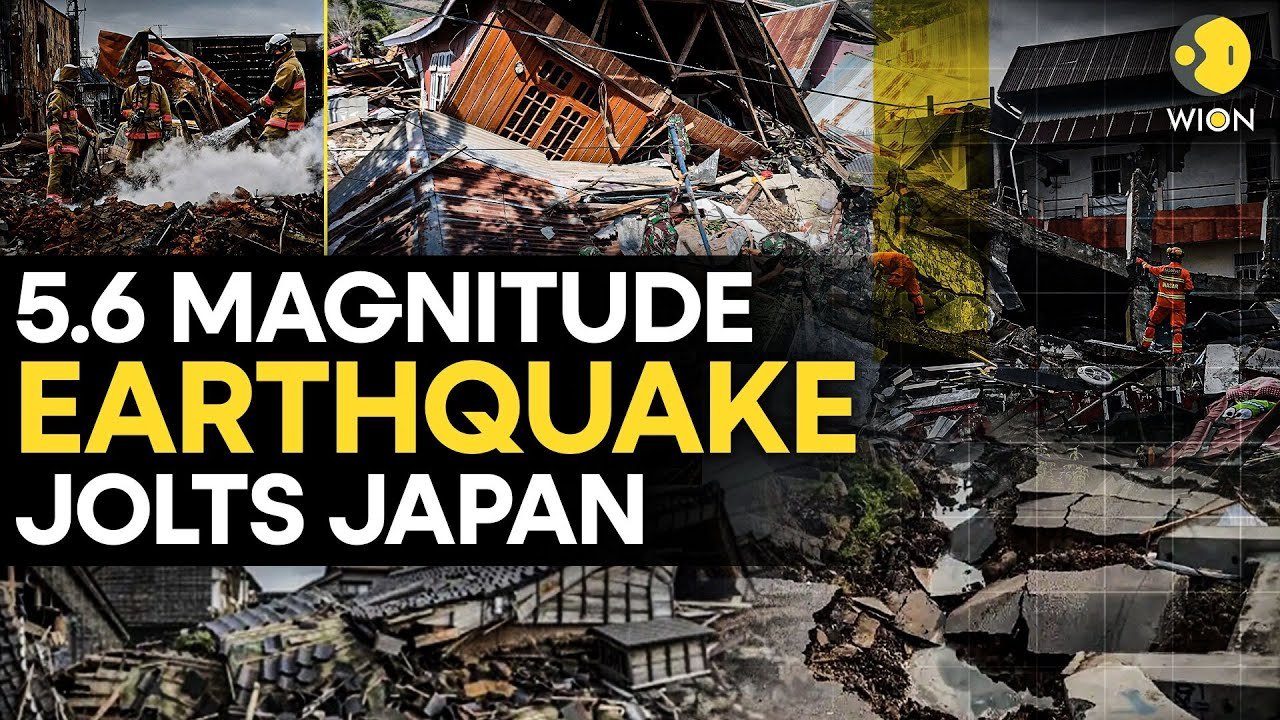
5.6 magnitude quake jolts northern Japan – what happened?
A 5.6 magnitude quake jolts northern Japan off the coast of Aomori prefecture in the early hours of Friday, but this time there is no tsunami alert and no damage has been reported. The earthquake came only weeks after a much stronger 7.5–7.6 magnitude quake shook the same wider region and reminded the world again that Japan lives with frequent and sometimes powerful tremors.
According to the United States Geological Survey and local monitoring networks, the 5.6 magnitude quake struck offshore, north‑east of Aomori, at about 1:17 a.m. local time. The quake was recorded at a depth of around 40–62 kilometers below the seabed, which means it was not extremely shallow but still strong enough for people in parts of northern Japan to feel light to moderate shaking.
People in Aomori and nearby areas reported that they felt their beds move and light items rattle, but the shaking did not last very long. There were no early signs of collapsed buildings, no serious injuries, and no major power cuts linked to this particular tremor, which helped keep the situation under control.
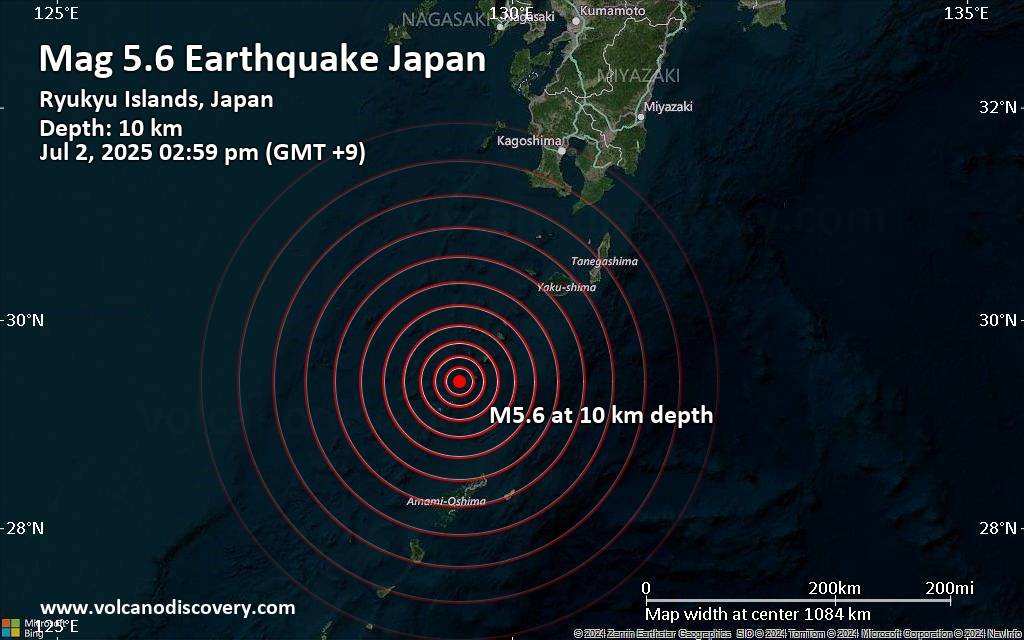
No tsunami alert and no major damage
One of the first questions many people ask after hearing that a 5.6 magnitude quake jolts northern Japan is whether a tsunami warning has been issued. In this case, Japan’s Meteorological Agency and international monitoring centers quickly confirmed that there was no threat of a tsunami from this quake.
Experts explain that the risk of a tsunami depends on several factors, including the magnitude, the depth, and the way the fault moves under the sea. While a 5.6 magnitude earthquake can feel scary for people living nearby, it is much weaker than a 7‑class or 8‑class event and usually does not displace enough water to create large tsunami waves.
Local authorities and foreign media outlets also reported that there were no immediate signs of structural damage in towns and cities near the epicenter. Roads, bridges, and buildings stayed in use, trains and flights continued on their schedules, and emergency services did not report any serious accident linked directly to this event.
Connection to the earlier 7.5–7.6 magnitude quake
This 5.6 magnitude quake jolts northern Japan only a few weeks after a powerful 7.5–7.6 magnitude earthquake struck the same broader region off the coast of Aomori and Hokkaido. That earlier quake triggered strong shaking, injuries, minor damage, and tsunami warnings that led to evacuation orders for over 100,000 people in coastal communities.
Seismologists say it is normal for an area that has just experienced a major earthquake to see further moderate tremors and aftershocks in the days and weeks that follow. The earth’s crust adjusts slowly, and pressure moves along faults, which can produce new events nearby with different magnitudes and depths.
However, scientists are careful to point out that not every later quake is a direct aftershock in the strict technical sense, and the pattern of activity can be complex. Still, the fact that a 5.6 magnitude quake jolts northern Japan so soon after the 7.5–7.6 shock keeps public attention on safety and preparedness in the region.
Why Japan has so many earthquakes
Japan is one of the most earthquake‑prone countries in the world because it sits on the boundary of several major tectonic plates, including the Pacific Plate and the North American Plate. These plates are constantly moving, and where they meet, they push against or slide past each other, which causes stress to build up in the rocks deep underground.
When the stress becomes too large, it is released suddenly as an earthquake, sending seismic waves through the ground and across the sea. This is why quakes of many different sizes hit Japan every year, from small tremors that only instruments feel to very large events that can damage buildings and sometimes create tsunamis.
Because this pattern is part of daily life, Japan has developed some of the world’s strictest building codes, early warning systems, and public education programs for earthquake safety. These measures help reduce damage and save lives even when a strong quake occurs, and they also explain why a moderate event like the one where a 5.6 magnitude quake jolts northern Japan can pass without serious harm.
How people reacted in northern Japan
For many people living in Aomori and other northern prefectures, an earthquake at night is not a new experience, but it can still be worrying, especially after the recent 7.5–7.6 event. Local reports and social media posts show that some residents woke up, checked on family members, and quickly turned to TV, radio, or mobile apps to see if a tsunami alert or emergency warning had been issued.
Once they saw that there was no tsunami threat and that the magnitude was 5.6, not as strong as the earlier major quake, many people were able to relax and return to bed or continue their normal activities. The calm response reflects long experience with earthquakes and the trust that people in Japan have in their early warning systems and official information channels.
At the same time, authorities used this event as another chance to remind people to keep basic emergency items ready at home, such as drinking water, non‑perishable food, flashlights, batteries, and a small first‑aid kit. They also encouraged residents to review their evacuation routes and know where higher ground or safe shelters are located in case a future quake does generate a tsunami.
Simple safety tips during a quake
Events like this, where a 5.6 magnitude quake jolts northern Japan without damage or tsunami, are sometimes called “wake‑up calls” because they remind people to refresh their safety knowledge before a bigger disaster happens. Earthquake safety advice from Japanese and international agencies is simple and can be followed by almost anyone.
If you are indoors when the shaking starts:
- Drop to the ground so you do not fall, take cover under a strong table or next to an interior wall, and hold on until the shaking stops.
- Stay away from windows, glass doors, tall shelves, and heavy objects that could fall on you.
- Do not rush for the stairs or elevator during strong shaking, because you could fall or become trapped if the power goes out.
If you are near the coast in an area that can be hit by a tsunami:
- If you feel very strong or long‑lasting shaking that makes it hard to stand, move quickly to higher ground as soon as it is safe, even if you have not yet heard an official warning.
- Follow information from official agencies like the Japan Meteorological Agency, local governments, and disaster management offices, and avoid spreading rumors.
What this quake means for the future
Experts say that the fact a 5.6 magnitude quake jolts northern Japan without causing serious damage is good news for now, but it does not mean the earthquake risk is gone. History shows that large earthquakes can still strike Japan even after months or years of smaller events and quiet periods.
That is why Japan continues to invest in stronger buildings, better monitoring technology, and clear communication with the public. Every earthquake, even a moderate one with no damage, is a chance to test systems, improve education, and remind people how to protect themselves and their families.
For people outside Japan, this event is also a reminder that natural disasters can happen without warning, and that learning from a country with long experience can help improve safety everywhere. Simple steps like securing heavy furniture, preparing basic supplies, and knowing local emergency contacts can make a big difference when the ground suddenly starts to shake.
Final overview of the event
In short, a 5.6 magnitude quake jolts northern Japan off the coast of Aomori prefecture, but there is no tsunami alert, no damage, and no injury reported from this particular tremor. The quake comes soon after a major 7.5–7.6 event in the same wider region, so experts are watching the area closely while also reminding people to stay informed and prepared.
For now, life in northern Japan quickly returns to normal, but the experience reinforces an old lesson: in a country built on active fault lines, calm preparation and strong safety culture are the best protection against future quakes.