
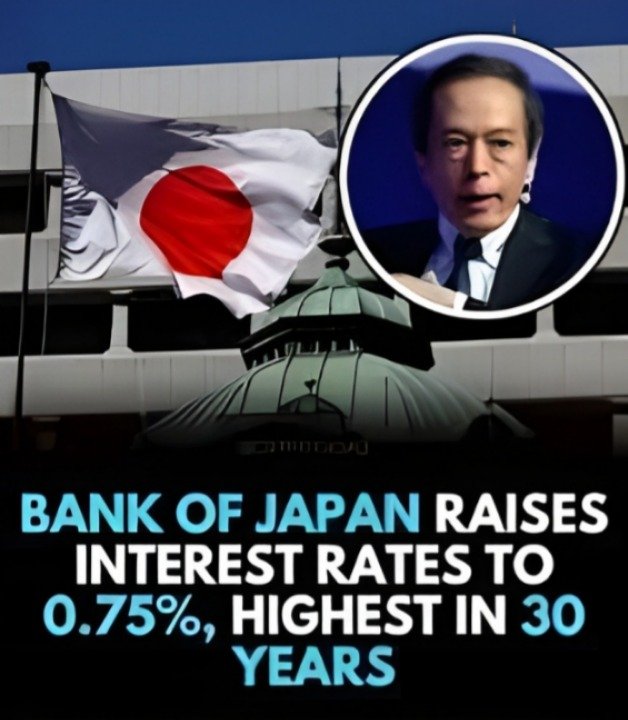
Introduction: A historic rate shift
The latest Bank of Japan interest rate hike has taken the policy rate to around 0.75%, the highest level in roughly three decades and a clear break from Japan’s long experiment with ultra‑loose monetary policy. For years, Japan kept rates near or below zero to fight deflation and support weak growth, but that phase is now ending as inflation stays above the central bank’s 2% target.
This shift puts the Bank of Japan closer to other major central banks, even though its rates are still much lower than those in the United States or Europe. The change also sends a strong signal that Japan’s policymakers believe price pressures and wage gains are finally becoming more sustainable.
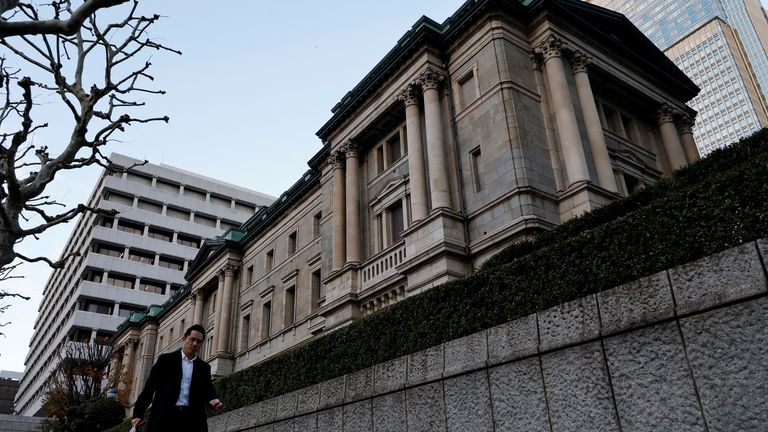
Headquarters of the Bank of Japan in Tokyo, as markets react to the latest Bank of Japan interest rate hike to 0.75%, the highest level in 30 years.
Why the Bank of Japan interest rate hike matters now
The timing of this Bank of Japan interest rate hike is crucial because inflation in Japan has recently stayed above 2% for an extended period, driven by higher import costs, a weaker yen and gradually rising wages. For decades, Japan struggled with the opposite problem: stubbornly low or negative inflation and weak demand, which forced the central bank to keep policy extremely loose.
By moving to 0.75% now, the Bank of Japan is trying to balance two risks: allowing inflation to run too hot versus tightening so quickly that it hurts the fragile recovery. The decision also helps restore credibility to the central bank’s inflation‑targeting framework, showing markets that it is willing to act when price stability is threatened.
From negative rates to 0.75% – a long journey
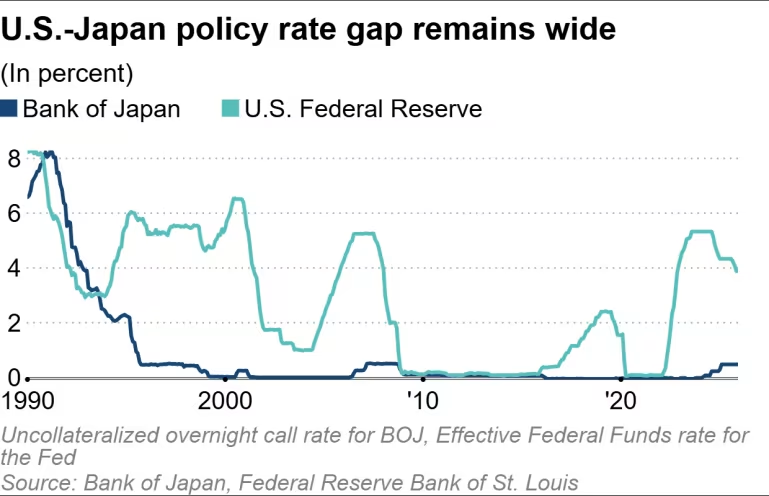
Japan’s rate path to this point has been unusually long and gradual. After years of near‑zero rates, the Bank of Japan pushed policy into negative territory in 2016, setting the short‑term rate around −0.1% and using yield‑curve control to cap long‑term bond yields. The goal was to weaken the yen, lift inflation expectations and encourage borrowing and investment.
As inflation began to firm and global yields moved higher, the Bank of Japan started to slowly relax some of these controls before finally delivering the Bank of Japan interest rate hike that lifted the policy rate to about 0.75%. This level is still low by international standards, but for Japan it represents the highest rate since the mid‑1990s and a symbolic break from the emergency policies of the past.

Impact on inflation and wage growth in Japan
One of the central reasons for the Bank of Japan interest rate hike is the persistence of inflation above the 2% target, with core consumer prices hovering around the 3% mark in recent months. Higher energy, food and import costs initially pushed prices up, but more recently stronger wage negotiations and labour shortages have begun to support domestic price pressures as well.
Raising rates to 0.75% is intended to prevent inflation from drifting too high while still allowing the economy to adjust gradually. If wages continue to rise and inflation stabilises slightly above 2%, the Bank of Japan may consider further, measured rate increases, but it is signalling that any future tightening will be slow and data‑dependent.
How the rate hike affects the yen and bond yields
The Bank of Japan interest rate hike also has a direct impact on the yen and Japanese government bond (JGB) yields. Higher policy rates tend to support the currency because they improve returns on yen‑denominated assets and make it less attractive to borrow in yen for carry trades. As expectations for higher Japanese rates have grown, the yen has shown signs of stabilising after a long period of weakness against the dollar and other major currencies.
On the bond side, the move to 0.75% has pushed long‑term JGB yields closer to levels not seen in decades, reflecting higher term premiums and reduced central bank intervention. This raises borrowing costs for the government, which carries one of the largest public‑debt burdens in the world, but it also restores a more normal yield curve that can benefit pensions, insurers and long‑term savers.
What global investors should watch after the Bank of Japan interest rate hike
For global investors, the Bank of Japan interest rate hike changes several long‑standing assumptions. For years, Japan’s near‑zero yields encouraged investors to borrow cheaply in yen and invest in higher‑yielding assets abroad, a strategy known as the carry trade. As Japanese rates rise, this trade becomes less attractive, potentially reducing demand for riskier assets in emerging markets and other high‑yield segments.
Higher Japanese yields could also trigger some capital repatriation, as domestic investors find better returns at home and reduce their exposure to foreign bonds. This may put upward pressure on global borrowing costs at the margin, especially if Japanese institutions start trimming large overseas bond portfolios over time.
Effects on borrowers and savers inside Japan
Inside Japan, the Bank of Japan interest rate hike has mixed consequences for households and businesses. On the positive side, savers who endured years of near‑zero returns on deposits and government bonds may finally see slightly higher interest income, which can support consumption and financial security, especially for retirees.
However, higher rates also mean more expensive borrowing costs for mortgages, corporate loans and other forms of credit. Highly leveraged firms or households may face larger interest payments, which could weigh on investment and spending if income does not grow at a similar pace. Policymakers will therefore watch credit conditions carefully to avoid unnecessary stress in the banking system and real economy.
Final outlook: What happens next?
Looking ahead, the Bank of Japan interest rate hike to 0.75% is widely seen as the beginning of a gradual normalisation process rather than a rapid tightening cycle. Many economists expect the central bank to move cautiously, potentially edging rates closer to 1% over the coming year if inflation and wage growth remain resilient, while keeping the option open to pause if global or domestic conditions deteriorate.
For markets, the key variables to monitor will be the path of Japanese inflation, the performance of the yen and the behaviour of long‑term JGB yields as the central bank steps back from aggressive intervention. Together, these developments will determine whether this historic policy shift becomes a smooth transition toward normalisation or a more volatile adjustment phase for Japan and the global financial system.


One thought on “Bank of Japan Interest Rate Hike to 0.75%: Why This Bold Shift Matters for Inflation and the Yen”